Bold Business Logo

Self-Healing Robots Have Arrived

There have been many concerns raised over the capabilities of artificial intelligence (AI), the power they possess, and the bold impacts they may have on mankind. Experts recently petitioned the United Nations to ban “killer robots”, and AI technology is developing at a rapid rate with new finds being announced each day.

Once developed, they will permit armed conflict to be fought at a scale greater than ever, and at timescales faster than humans can comprehend.

Now, there is further proof to suggest that the development of artificial intelligence is getting out of hand after scientists created self-healing robots.

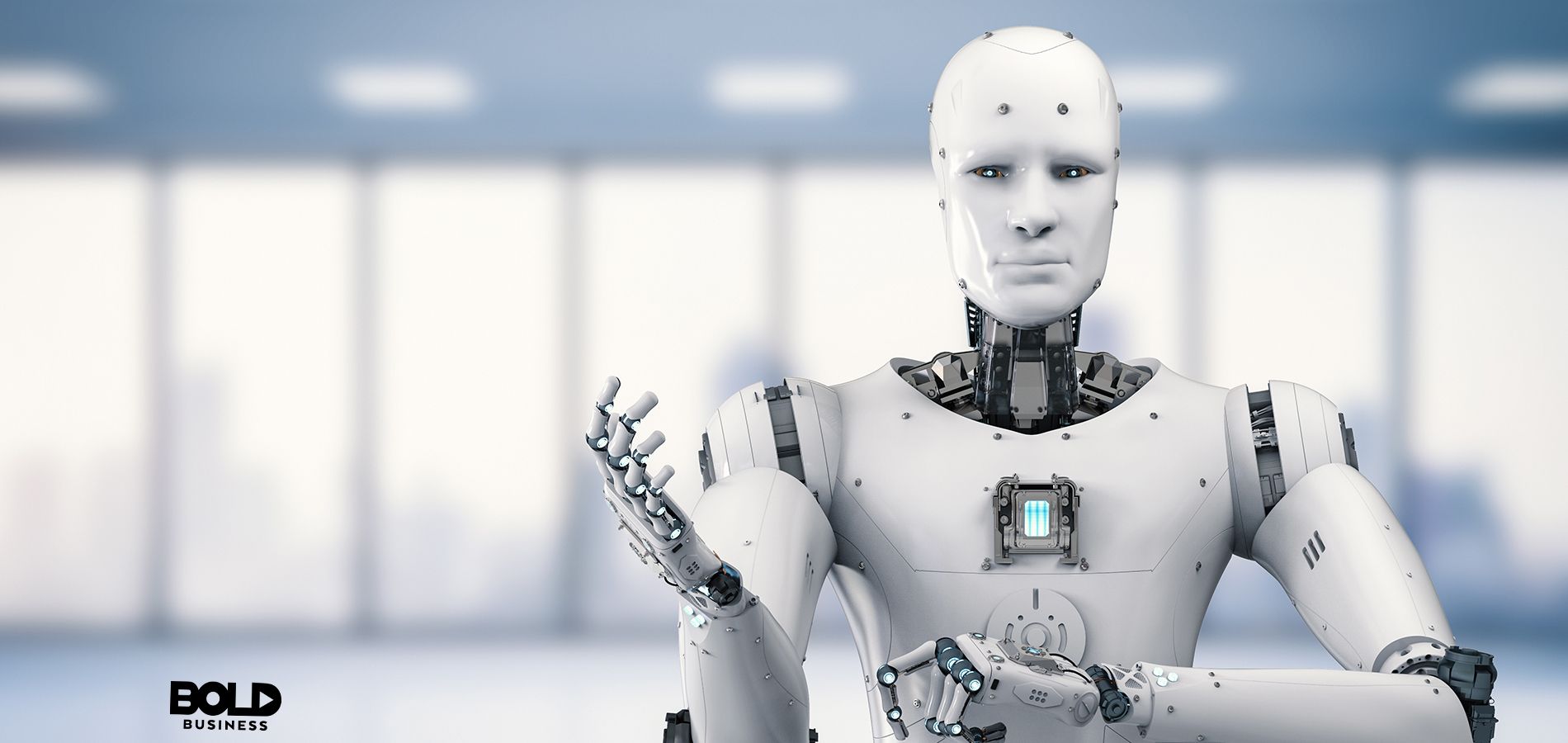
According to Yahoo Finance, researchers from the Free University of Brussels have designed a self-healing polymer which will give robots the ability to heal themselves if they are damaged, making them almost indestructible.

To demonstrate their findings, the research team built a robotic hand out of a rubber-like self-healing polymer. The hand was able to completely heal from stabs and slices to its structure. The science behind the technology is based on heat, where engineers found that if they apply heat to the damaged area, the polymer will heal itself and repair the injury.

The first stage of the science shows that “wounded” robots or robotic technology can be repaired by an engineer placing heat on a damaged area. The next stage would be to program the robot to place heat upon a damaged area by itself to create a self-healing fix.

This technology could be rolled out in the very near future to be used in the engineering and tech industry for robots used in mass manufacturing and production, or even to be used in commercial products like cell phones and tablets.


Experts claim the find is outstanding, one that could lead to robots repairing themselves without human intervention, either within an industry setting or on the battlefield.

If such a technology can be developed to be used on AIs on the battlefield, then it would give that nation an edge over its opponent and could lead to a significant number of casualties.

We recently wrote how 116 leading robot experts came together to petition the United Nations to ban so-called “killer robots”. This latest self-healing technology could be used as part of combat operations to prolong the life of robots in battle.

In a letter to the UN, Tesla’s Elon Musk and other tech leaders warned the organization of “a third revolution in warfare” and called for a “ban on the use of AI in managing weaponry.”

“Once developed, they will permit armed conflict to be fought at a scale greater than ever, and at timescales faster than humans can comprehend,” the letter states.

There’s no doubt that this bold idea could prove beneficial in many areas, but if the technology falls into the wrong hands or is used in combat situations it could lead to many issues — or, some would argue, even spell the end of mankind.

Online Learning, Engine for Diversity?

Diversity is a big issue in the workplace, even more so today in the advent of social media and instantly sharing experiences online especially for those who are not afraid of taking bold actions regarding the topic. In fact, it has created its own momentum in efforts to bring a wider range and a more equal distribution of people, culture, sexual orientation, and race.

Admittedly, there is great demand for computer science and IT-related education, however, it is still debatable whether the students might not have been better off in the residential program.

In the past few years, there have been more discussion about race since the civil liberties marches of the 1950s and 1960s. The issue is not just equality in law, but equality in everything else, from the workplace, opportunities, education, law enforcement, and in all other aspects of life.

There have been efforts at more diversity and inclusion, especially in the workplace but sometimes the causality is in question. Understanding what causes more diversity in education or in employment can help in creating more opportunities for people of color and minorities.

Recently, a story came out stating that there is more diversity in Georgia Tech’s online Master of Science in Computer Science (OMS CS) program compared to its residential program. The online degree program had 212 enrollees, while the residential program only had 64 students.

Although the disparity is obvious, what is not is the cause. Are there more enrollees in the program because it is online, or is it due to the lower cost? The online degree costs $6,600, while the residential program costs $42,000 per year. This is important due to the more diverse enrollees in the online degree program. This also relates to having more enrollees for underrepresented minorities and women: are these sub-populations enticed to enroll because these are online courses, or because the cost is much cheaper?

There is also the separate issue about online courses, on whether there is a difference in results or learning between studying online and attending in the classroom. The only way to test this is in the ensuing employment, whether those who attended online courses have had as much success as those who attended the residential program.

Scaling Up Online Education

Images of different races of workers.

The experience in Georgia Tech is important for higher education in general. The school scaled up its online program to lower the cost of matriculation. It has resulted in an expanded enrollment, with more diversity. This can be a point to the use of online learning as a tool to increase diversity in the academe.

With today’s social climate, the more pertinent issue is how to prove that online learning can help fuel diversity. Admittedly, there is great demand for computer science and IT-related education, however, it is still debatable whether the students might not have been better off in the residential program.

Although the question of which is the better program in terms of employment output should be a separate issue, what is clear is that more students enroll in online courses, and this has allowed more enrollees from underrepresented minorities and women to avail of the program.

What is clear is that for whatever reason, whether it is due to being online, or due to the lower cost, there are more enrollees across the spectrum. This program may end up to be an agent of diversity in higher education.

Why The School System Needs To Change? The Need To Adapt For Lover and Hater of Tech

As technology continues to change every facet of daily living, an educator from the City University of New York (CUNY) is proposing a bold idea: educate both techno lovers and technophobes in a curriculum that is tech-inclusive. This “New Education,” as professor Cathy Davidson calls it in her book of the same title, proposes a revision of higher education due to the increasing presence of technology in education. The idea also addresses the automation of various everyday systems, which has helped change economic demands.

New education has to start from within the educational system. It calls for reforms that look at technology’s impact on daily living as well as the many changes that it spurs in today’s society.

The American higher education system is over 150 years old, and was designed to suit the needs and professional demands of the times. Her call for “new education” stems from the fact that majority of jobs and professions have already been overtaken by technology in various ways, shapes, and forms.

EdSurge, an edtech media company based in California, spoke with Davidson about her book. In the interview, she cited taxi driving as an example. Driving a cab and ferrying passengers seems like a stable profession, until you realize that they could soon become obsolete. On one hand, regular cabs are threatened by the arrival of self-driving cars and drone taxis, with latter currently being test-used in Dubai to ferry passengers to short distances. Freight delivery, on the other hand, could also become a thing of the past when the Hyperloop System is adapted and implemented in major cities all over the world.

Social media, for its part, has changed how people connect and interact with one another. Professions and education are evolving almost as rapidly as the newest gadget is manufactured and released to the market.

In terms of education, however, diversity and inclusion need to be given ample attention. The professor believes that new education should be modified in order to recognize various intelligences, skills, and talents. To put it more directly, this new education should go beyond recognizing those who do exceptionally well in exams or those who make a million dollars after they graduate from school.

why the school system needs to change? For Technophobe and Technophile

Davidson argues that students must be taught how to face challenges in life and how to become productive members of society. This is the opposite of today’s system where students are taught to be grade-conscious and to do well in exams, graduate with honors, and land a good job after.

What About the Technophobes?

Even technophobes, the people who dislike or avoid new technology, could also benefit from new education. It’s important for today’s people view technology in a more positive light because it’s now part and parcel of daily living. Simple tasks such as getting ticket to the train or cinema have now become automated using tech. For example, instead of interacting with a human teller at the ticket booth, there is now a machine that accepts payments and dispenses tickets. Some even sell these tickets online, which is convenient for many who want to save time. The role of new education for these people would be to slowly open their eyes to the technologically advanced alternative, helping them warm up to using them.

Learning the principle behind automation would also help more people accept technology. More importantly, being technologically adept doesn’t mean having the latest gadget or gizmo. It means truly understanding the purpose of the machine or automated system and being able to appreciate its convenience.

New education has to start from within the educational system. It calls for reforms that look at technology’s impact on daily living as well as the many changes that it spurs in today’s society. It also means helping ordinary folk maximize the benefits of technology in their everyday lives.

Are you depressive or not? Google test for depression is now available

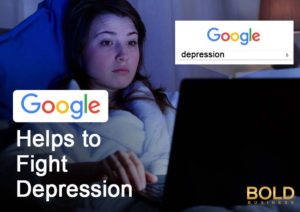
Google test for depression introduced as a bold idea to help those who think they may be suffering from depression but are not yet ready to go to a physician. On the Google page, whenever there is a search for “depression,” a question will appear asking users if they want to take part in a questionnaire. This is a 9-question test that can help determine if the person is potentially depressive or not.

Google test for depression has not been spared the flack for their attempt to help depression. This has mainly come from people who think that this is another way that the search giant is invading privacy or using its data to mine information about people.

Depression is a condition that is still not well-understood by the general population. People casually drop the word, as if depression means merely being sad about something. Also, there is a stigma to depression because it is a mental health condition. There are still some people who believe that if you can get up in the morning without anything physically wrong with you, then you are healthy.

Google test for depression is not quite well-accepted yet because of a mental health issue, something the majority of people do not accept or understand. Even those who may have depression would rather deny that they are suffering from it—they would rather keep the condition to themselves instead of going to a doctor to have it confirmed and diagnosed. For a lot of people, it is better to be in doubt yet live in comfortable silence than to have it confirmed that you are mentally ill and experience humiliation from peers, friends, and even loved ones.

According to the National Alliance for Mental Illness (NAMI) in America, statistics show that one in five people will have a depressive episode in their lifetime. Of these, only half will reach out for support.

Paving the Way for Mental Health Tech

Google test for depression approach is discreet, yet it has the research to back it up. NAMI also believes that this is a big step forward in helping those who have depression. The test itself offered by Google is just a first step. It is recommendatory, and is not binding—only a qualified doctor would be in a position to determine depression and to subsequently prescribe medication.

google test for depression

Assistance and support is the key. According to NAMI, it takes an average of seven years between the initial onset of symptoms to the time that the patient receives treatment. During that time, there are a lot of hurdles to treatment. First off, those who have depression would usually not want to go to a doctor for a diagnosis. Even after being diagnosed for depression, the patient would often still be in denial. The stigma of mental illness is deep-rooted, often preventing the patient from understanding that the condition is treatable.

Clinical depression can worsen and last for months or even years. Getting a proper diagnosis is hard enough when the patient does not want or is afraid, to be diagnosed. Sadly, the results of depression can get ultimately damaging, with more than one out of every ten people with depression ending up committing suicide.

Google test for depression has not been spared the flack for their attempt to help depression. This has mainly come from people who think that this is another way that the search giant is invading privacy or using its data to mine information about people. Objectively, this is one way for such a simple request for information can help an individual.

Doctors are also in a similar dilemma. Most times, the people who notice the symptoms for depression are friends and family; however, they cannot approach the general practitioner to ask about a person’s health, due to confidentiality issues. Family and friends can only pray that their loved one submits to a test from a general practitioner (GP).

Google test for depression can streamline the process of diagnosis and subsequent treatment. While what they have is not a substitute for a proper psychiatric assessment, it could eventually lead to a person getting one. This bold idea can save more lives in the long run.


How can we help?

Bold Business Insights
Privacy Overview

This website uses cookies so that we can provide you with the best user experience possible. Cookie information is stored in your browser and performs functions such as recognising you when you return to our website and helping our team to understand which sections of the website you find most interesting and useful.