
Bold Business Logo

App Monitors Heart Health

Scientists from Pasadena have developed a heart health monitor app that can provide information about the health of your heart at the touch of a button, an invention that can create a bold impact in cardiovascular healthcare.

What is exciting about this study is that it shows our technique is as accurate as echocardiography at estimating LVEF when both are compared to the gold standard of cardiac MRI.

Engineers from the California Institute of Technology (Caltech), Huntington Medical Research Institute, and the University of Southern California (USC) have conducted successful clinical trials to demonstrate their app which uses a smartphone simply held to the users neck to give life-changing results.

According to reports, the app can deliver what used to require a 45-minute scan from an ultrasound machine in just a few minutes.

“The team developed a technique that can infer the left ventricular ejection fraction (LVEF) of the heart by measuring the amount that the carotid artery displaces the skin of the neck as blood pumps through it,” Pasadena Now reports.

“LVEF represents the amount of blood in the heart that is pumped out with each beat. In a normal heart, this LVEF ranges from 50 to 70 percent. When the heart is weaker, less of the total amount of blood in the heart is pumped out with each beat, and the LVEF value is lower,” it added.

LVEF is used by the medical profession as a key measure of heart health, used by physicians and professionals in the medical field to base diagnostic and therapeutic decisions.

To measure LVEF using the new app, researchers simply held iPhones against volunteers’ necks for one to two minutes. The volunteers immediately received an MRI read out, and data from both the standard MRI test and the new app test were compared.

Woman with heart health monitor app.

Scientists found that the measurements taken by the smartphone had a margin of error of ±19.1 percent compared with those done in an MRI machine. “By way of comparison, the margin of error for echocardiography is around ±20.0 percent. That means, for example, if the app generated an LVEF reading of 40, it would have a margin of error of 40 x 19 percent, which equals about plus or minus 7.6 points,” the paper stated.

The study has gained worldwide praise following its inclusion in the July issue of the reputable Journal of Critical Care Medicine, and the invention is already close to being rolled out commercially.

“In a surprisingly short period of time, we were able to move from invention to the collection of validating clinical data,” Caltech’s Mory Gharib (PhD ’83), senior author of the paper, said.

“What is exciting about this study is that it shows our technique is as accurate as echocardiography at estimating LVEF when both are compared to the gold standard of cardiac MRI. This has the potential to revolutionize how doctors and patients can screen for and monitor heart disease both in the US and the developing world,” Gharib said.

This bold idea will not only revolutionize the healthcare industry, but will allow heart suffers the ability to test their own heart health at home simply by using an app, saving countless lives in the process.
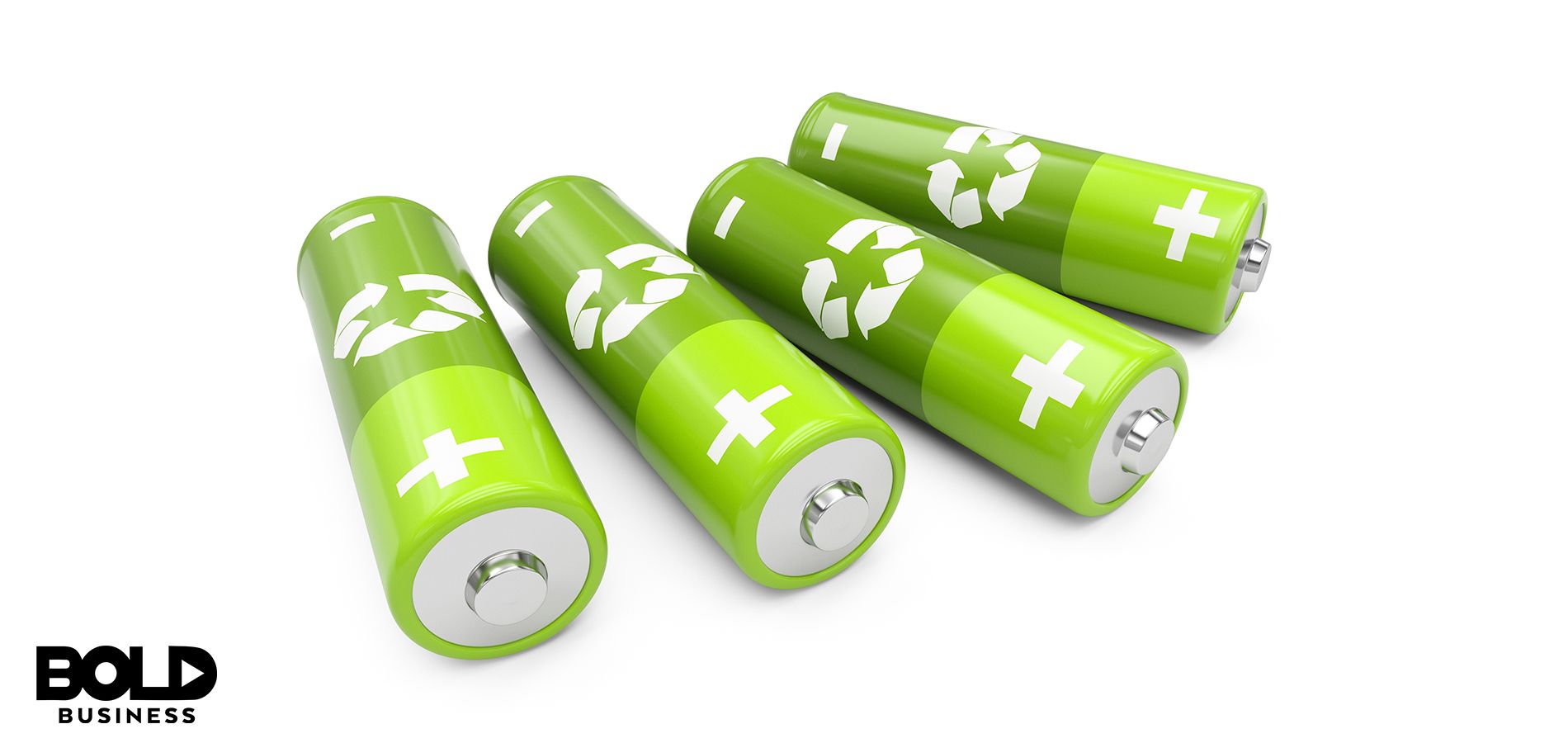
Green Batteries & the Clean Energy Revolution: The road to a green future

The signs are clear that clean energy will dominate the world within the next 20 years, creating bold impacts in the everyday lives of people all over the world. As such, the next step for leading tech firms is to produce a “super” clean and environment-friendly battery—such as ‘green batteries’ —that will dominate in a new electrified world.

Green Batteries and the Future

Former Tesla executive Peter Carlsson recently revealed that he will build a $4.5-billion electric battery plant to power electric cars, trucks and ships. “We will produce a battery with significantly lower carbon footprint than the current supply chains,” Carlsson shared. According to Wired, his startup firm Northvolt has already raised $120 million for the first phase of the project, which will produce 32 gigawatt-hours when it becomes fully operational in 2023.

Elon Musk’s Gigafactory—to be positioned in the Nevada desert—will also produce “super” batteries or green batteries to power the world’s growing electric markets. Both bold ideas are helping to push the world toward a greener future.

At least eight U.S. states have recently outlined plans to ditch gas and diesel cars in favor of electric vehicles—the list includes California, New York, Texas and Washington state. The United Kingdom, France, India and Norway have all announced that they will ban gas and diesel cars in favor of electric vehicles by 2040. At least 10 other countries around the world have set targets for the sale of electric cars, and the clean energy revolution is really starting to take shape. Indeed, organizations and leading energy firms right across the globe are switching their focus toward the future, clean energy.

On the Clean Energy Revolution

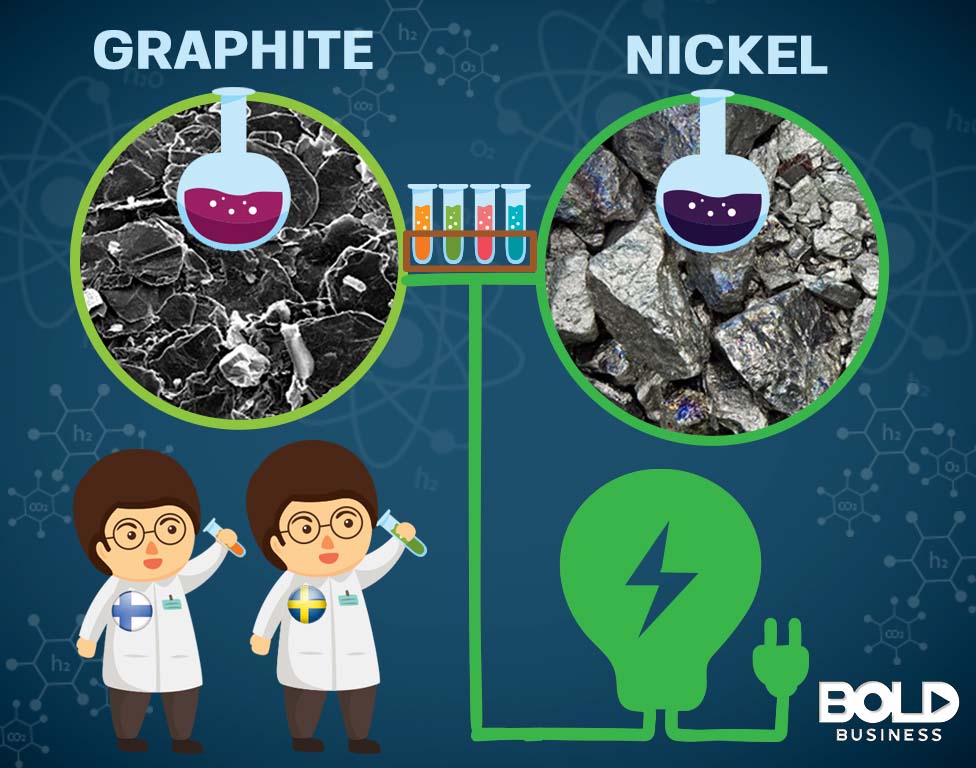
a photo of two cartoon scientists, each holding up a test tube, while there are magnified photos of graphite and nickel above them, all in relation to the topic of green batteries

Carlsson is determined to lead this clean energy revolution by creating green batteries from raw materials like graphite and nickel—both of which will be sourced from Sweden—and cobalt from Finland. He says the lithium-ion batteries of Northvolt will have a carbon footprint that’s close to zero. In fact, Northvolt aspires to appeal to drivers who are conscious of being environment-friendly and who not only look at the advantages of driving an electric car but also count the energy consumed to build the lithium-ion battery in the first place.

Northvolt will also make its own anode and cathode chemical mixes instead of buying from European or Asian manufacturers. In point of fact, Sweden has clean hydropower in abundance from the northern mountain rivers that can be used to power Carlsson’s battery factory without burning fossil fuels or using nuclear power.

“The point is to support Europe’s green energy transformation,” Carlsson notes. “Right now the flow of batteries to Europe would mainly come from Asia. If you take the [coal-powered] energy grids of China or Japan, both of their carbon footprints are pretty high. When you accumulate that into a battery pack for a vehicle, that’s a significant footprint.”

Toward a Greener Future

Experts say that the real environmental costs come early on in the process when companies obtain lithium, cobalt, graphite, manganese and nickel for their batteries. If manufacturers follow this clean policy all the way from the beginning to the end of the supply chain, then the world can really start to adopt clean energy totality.

Medical drones delivery is the key on hard to reach remote areas

Zipline, a Silicon Valley medical drones delivery startup that has launched an initial blood delivery to Rwandan clinics in October 2016, is launching expanded operations into neighboring Tanzania. The move to the much bigger Tanzania is a bold action and an ambitious expansion by a company that started operations only a few months ago.

The Tanzanian hospitals and health centers will still rely on its traditional supplies, and Zipline will come in only as a last line of defense, delivering the goods to complement the existing supply chain.

The Tanzanian operations aim to cover 364,900 square miles of territory, which is about 35 times bigger than the area of Rwanda. Zipline, regarded as the largest medical drones delivery service in the world, will cover more than a thousand health facilities in Tanzania, including some remote and hard-to-reach areas.

The Tanzanian medical drones delivery operation, a partnership between the government of Tanzania and Zipline, will involve the delivery of various medical products from four distribution sites in the three major areas of the country. The Tanzanian operation will diversify Zipline’s product line, which used to deliver blood products in Rwanda exclusively. The Tanzanian service that is slated to start in the early part of next year will include the delivery of blood, HIV and malaria medications, emergency vaccines, and emergency medical supplies. Deliveries shall be accomplished through the use of an all-new fleet of medical drones delivery that could carry up to two kilograms (about 4.4 pounds) of cargo each, traveling 160 kilometers (approximately 100 miles) round-trip.

While the use of medical drones delivery service is nothing new, there is so much activity now in the use of drones for e-commerce deliveries. Amazon, the biggest marketplace in North America, conducted its first commercial product delivery, using a drone to a farmhouse in a rural part of England. The 7-Eleven convenience store chain has already delivered pizza and other products to its customers in Reno, Nevada. Even UPS has delivered a package using a drone launched from the top of its recognizable brown truck. Experimental deliveries of medicine have also been made in Appalachia.

Zipline’s venture into medical drones delivery uses fixed-winged that have more extended range and are sturdier in bad weather than the more popular multicopter models used by other companies in product deliveries. Started as a robotics company, Zipline decided to seek a product that will have a social impact in the developing world. They decided to take on the duty of providing access to essential medical products which are hard to deliver due to terrain and gaps in infrastructure. Zipline aims to improve the people’s access to the medical supplies by flying over impassable mountains and damaged roads, delivering supplies directly to clinics in remote areas.


While Zipline was exploring the possibility of starting its operations in Africa, the company’s engineers have been developing at the company’s headquarters in Half Moon Bay, California. A craft they invented, powered by twin electric motors, is capable of carrying 1.5 kg (about 3.3 lbs) of payload and can fly in nearly any type of weather condition. As the technology was developed, the tiny landlocked country of Rwanda in East Africa emerged as the ideal spot for the initial launching of the service. The country’s hospitals and health centers can be accessed only through a system of unpaved roads. The advantage of Rwanda is its compact territory, with the 12 million people residing in an area about the size of Maryland. This would allow the medical drones delivery to reach half of the region from only one launch site.

The government of Rwanda accepted the idea, altering the country’s civil aviation regulations to accommodate the operation of the drones. A distribution center was built near the town of Muhanga, on a hilltop site.

Zipline will have a different approach in its Tanzanian operations, as it will not be the first line of defense on medical supply delivery. The Tanzanian hospitals and health centers will still rely on its traditional supplies, and Zipline will come in only as a last line of defense, delivering the goods to complement the existing supply chain. The Zipline drones will mainly respond to cases of stock-outs, a common problem in the developing country where there is constant funding shortage or poor demand forecasting.

Zipline’s operations in Tanzania will be under scrutiny by teams of researchers from several countries that will evaluate the impact of the services. The hope is that if Zipline’s service works, it might just be the bold solution to the global public health problem of stock-outs that has plagued the developing world for decades.

Zomato Acquires Runnr; Positions Itself to Compete in the Food Delivery Busines

In the crowded business of on-demand food delivery, global restaurant guide Zomato has acquired India’s food ordering platform Runnr, a bold move that took place over several months.

Runnr will have to scale up as Zomato plans to increase its capacity to be able to deliver throughout the whole of India and in the United Arab Emirates as well.

Zomato started out as a restaurant guide where food shops, diners, and other restaurants were rated by the public; while Runnr is a delivery service start-up resulting from the merger of RoadRunnr, a delivery service start-up, and TinyOwl, a food delivery service start-up. Individually, RoadRunnr raised $28 million while TinyOwl raised $27 million from venture capitals.

The Runnr acquisition has been brewing for several months, with the lengthy decision affected mainly by the different investors that funded parent apps RoadRunnr and TinyOwl. However, it was only a matter of time before Zomato took control and delivered on the money involved. Zomato was already working with Runnr for several months prior to the announcement of the bold move.

Another would’ve-been buyer of Runnr was UberEATS. The food delivery service subsidiary of Uber had Runnr at a valuation of $50 million. In contrast, Zomato’s valuation was only $40 million, however, Zomato was willing to pay $20 million.

Some Things Can’t Compare to Food Delivery

Food delivery is a big thing in India. Traditional pack lunches are not brought by office workers when they leave their homes in the morning. Instead, there is a food delivery system in place, where the hot food in their tin containers are picked up from the home a couple of hours before lunch time. These are brought to their rightful owner by passing it along from one collection point to another. This system has been in place in the country for many years. Although the food delivery services start-ups are not going to compete with the home food delivery system, the efficiency of the old system remains the standard for Indian food deliveries.


In terms of business, Runnr has around 300,000 deliveries per month, which is about one-tenth that of Zomato. What Zomato plans to do is to scale up Runnr and take over their food delivery service.

The Zomato service model uses restaurant-owned vehicles for food deliveries. Restaurant personnel are used for food delivery during off peak hours, and during peak hours, they use Runnr and the Mumbai-based Grab to deliver its food. There will be a change in the model as it will now make use of Runnr scaling it up to compete with other food delivery services like Swiggy and FoodPanda.

After the acquisition, Runnr will still continue as an independent company wholly owned by Zomato. It will still be run by the same CEO, Mohit Kumar, and functioning as a full-service logistics company servicing a wide range of industries like pharmaceuticals, grocery and online shopping. This would allow Runnr to have a wider base of operations and not be dependent on the food industry. Runnr was also able to raise an additional $7 million after the acquisition was announced.

Runnr will have to scale up as Zomato plans to increase its capacity to be able to deliver throughout the whole of India and in the United Arab Emirates as well. It had previously scaled back its food services operations to 40 locations. With the new initiative from Zomato, it will be back to more food deliveries than ever before.

Zomato ran into problems of its own in the past. It was valued above $1 billion in 2015, before its valuation was halved by HSBC, and the company has undertaken some service cutbacks and staff layoffs. With the Runnr acquisition, Zomato now has a valuation of around $800 million and this bold move is expected to make their financials all red and juicy again.

How can we help?

Bold Business Insights
Privacy Overview

This website uses cookies so that we can provide you with the best user experience possible. Cookie information is stored in your browser and performs functions such as recognising you when you return to our website and helping our team to understand which sections of the website you find most interesting and useful.