Bold Business Logo

Certis, Fujitsu Display New Safety Tech

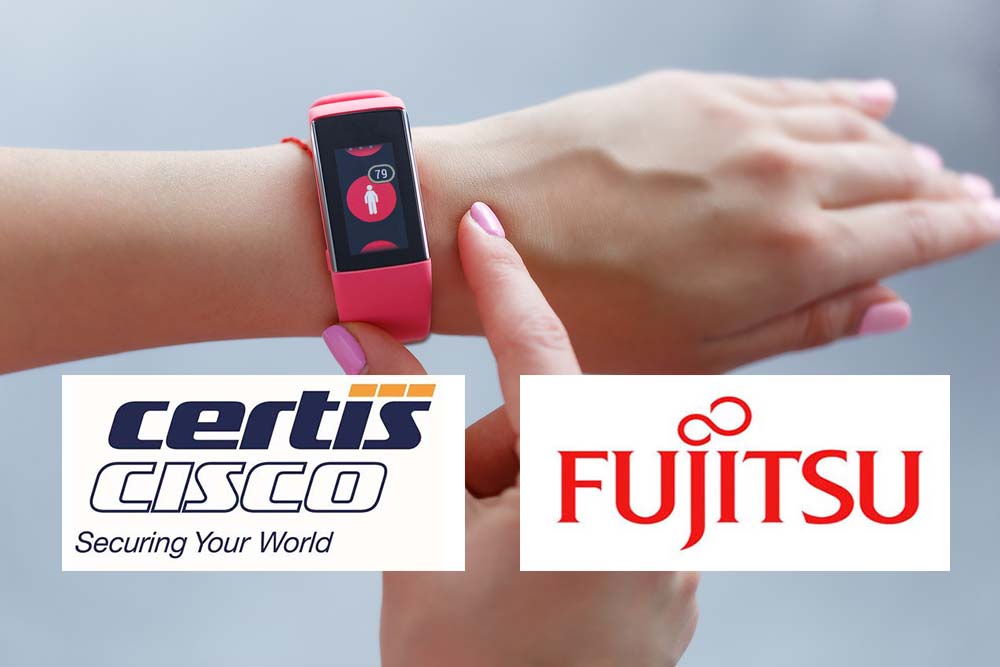
During the recently concluded International Safety and Health Exhibition held in Singapore, new tech tools for wearable personal safety devices were displayed to the public. These high tech toys are set to make a bold impact on the workplace. Among the most popular items in the event were a monitoring device from Certis, and two wearables from Fujitsu for personal safety.

The device can detect if the person has fallen, and then send an alert which would include information such as the person’s location. It can also measure the wearer’s pulse, as well as changes to the wearer’s acceleration, and even the barometric pressure surrounding him or her.

Certis Group Singapore demonstrated a device that made use of surveillance cameras incorporated into a shop floor safety monitoring system. With a combination of facial recognition and object detection software, the system presents itself as an integrated software that is also able to determine if an unauthorized person is on the floor.

This facial recognition software allows the system to determine if there are workers who are not wearing helmets. The system then flags these and sends an alert to the central administration. If there are any unauthorized personnel, these are also flagged and an alert is also sent. Their object recognition software is able to scan the floor to see if the company adheres and complies to various safety regulations. These include scanning for fire extinguishers and other safety equipment on the floor.

Fujitsu presented two wearables, part of UBIQUITOUSWARE, their Internet-of-Things (IoT) solution. As a whole, the suite of solutions allows for on-site data collection and analysis using the Fujitsu Sensor Algorithm.

The samples from Fujitsu include a driver safety device which detects whether a person is dozing off while on the wheel, as well as a personal wearable with a built-in GPS which can detect if a worker has fallen while on duty, and where he or she is located.


The Fujitsu Driver Drowsiness Detector is a portable device which the user wears while driving. It is meant to be used by fleet management systems, and is also available as an app on Google Play.

The Detector is a wearable sensor device a user wears around his or her neck. The sensor device contains a small sensor clip, and is attached to the user’s earlobe. This sensor clip detects pulse waves and determines if the user is getting drowsy and looks for any sign of unconsciousness. Among other things, the data can also be used to determine routes which would prevent the driver from getting drowsy.

The Fujitsu Vital Sensing Band is another safety device for the workplace. It is worn on the wrist, much like you would a fitness tracker. The device can detect if the person has fallen, and then send an alert which would include information such as the person’s location. It can also measure the wearer’s pulse, as well as changes to the wearer’s acceleration, and even the barometric pressure surrounding him or her. Locator sensors could be placed around the plant or building, thus allowing administrators to better locate a person via their Sensing Band.

Individually, these two devices are just examples of what UBIQUITOUSWARE can do. The whole suite of applications can be used to further develop other devices and applications without the need for individual unit testing. These can serve as the basis or backbone for a whole slew of IoT devices attached to sensors of different kinds.

Making use of IoT devices makes third-party development much easier. There is no need to start from scratch, since the functionality has already been included by Fujitsu. Additionally, the use of IoT standard communications protocols mean that these devices would be able to communicate with other standard devices, including cellphones.
Internet Fueled Feeds of Anxiety-related Condition Cyberchondria

The internet made of a lot of things easier, particularly accessing knowledge from sectors as varied as fixing a computer, dancing flamenco, to researching disease and medical conditions, regular people can now look up medical conditions and research on diseases and other maladies based on what they are experiencing. This has led to self-diagnosis and an anxiety-related condition cyberchondria – which has been making a bold impact, albeit not so positively, among netizens.

The anxiety takes form in their repeated visits to their doctors, with lists of maladies and symptoms that they compiled from the internet. The repeated tests not only do not persuade those who suffer from anxiety-related condition cyberchondria; instead, it makes them believe that they have a condition which has not been diagnosed properly.

Information about diseases as they are published online is different from the information given by a health professional. The doctor can provide context and meaning to the symptoms. It is also his job to narrow down the diagnosis according to your experience. Without this context, the information from the internet can be misinterpreted.

Doctors take years of training, medical school, and experience to understand an illness on a deeper level, not just know the symptoms at surface level. On the contrary, internet users have let their curiosity get the better of them. Anxiety-related condition cyberchondria, otherwise called compucondria, is like hypochondria but fueled by information from the internet. Even the name itself is a portmanteau of the terms cyber- and hypochondria. Users compulsively look up their conditions online and inexplicably feel these symptoms themselves. The anxiety caused by reading about these diseases has resulted in an escalation of cases where people have fear from the things they read online, which at times is a misdiagnosis.

Symptoms of Anxiety-related condition Cyberchondria

Some of the symptoms of cyberchondria include:

  • Excessive time spent online checking for signs.
  • You feel anxious about your conditions, and you start checking online.
  • You seek help or validation from other people online, especially on social media, chat rooms, and forums.
  • You seek medical help more often than you see your friends.
  • Besides the anxiety, you are in medically stable condition.

What is disconcerting is that anxiety-related condition cyberchondria is affecting a growing number of cases based on research out of the Imperial College London and King’s College London. The team of researchers is recommending that cyberchondria be considered as an anxiety-related condition and that the National Institute for Health and Care Excellence (NICE) should draw up guidelines on managing it.

The National Health Service (NHS) estimates that more than £420 million a year is spent on outpatient appointments, with millions more spent on unnecessary tests and scans. There is an estimate that up to one in five of outpatients suffers from health anxiety, and of these, only ten percent are diagnosed for anxiety.

According to Dr. Helen Tyrer, a senior clinical research fellow at the Imperial College London, the condition is also characterized by unfounded fear and excessive worry which do disappear despite reassurance from physicians. The anxiety can be triggered by an event such as a family member dying from a particular disease, or even a celebrity of the same age acquiring a condition. The idea is that since they are related or are of the same age as a celebrity, they feel that they are also susceptible to illness. They are also convinced that their medical condition is worse than it is.

The anxiety takes form in their repeated visits to their doctors, with lists of sicknesses maladies and symptoms that they compiled from the internet. The repeated tests do not persuade those who suffer from anxiety-related condition cyberchondria; instead, it makes them believe that they have a condition which has not been diagnosed correctly. This leads to further tests and the costs pile up even more.

Anxiety-related condition cyberchondria is something that educators and medical professionals should learn how to address. It is present in various countries and happening to people regardless of age, rank, or status. The availability of so much information has a bold impact on society and people’s lives, and this by-product of the internet age is not a pleasant one.

Hyperloop Comes to India

The Hyperloop is going on a roadshow to showcase their new transportation technology. Elon Musk’s Hyperloop Transportation Technologies (HTT) has recently signed a memorandum of agreement with the Andhra Pradesh Economic Development Board (APEDB) to develop their own hyperloop system. The agreement is the result of talks which started in December last year.

The India project is important not only for HTT but also for the Andhra Pradesh province. The project itself has both private and public proponents and investors. The stakeholders will be concerned with the route, making sure that this will answer the needs of the two cities as well as the surrounding areas

The bold action will develop a 27-kilometer (16.7-mile) tunnel between Amaravati and Vijayawada in the Andhra Pradesh province. This will cut down the travel time between the two cities from one hour to around 6 minutes. The first phase of the project will be a feasibility study which is expected to last 6 months and will start by October. Construction will be the project’s phase two and is expected to employ more than 2,500 people.

Nara Lokesh, the Cabinet Minister for Information Technology, Panchayati Raj, and Rural Development for the State of Andhra Pradesh, says that the Hyperloop will spur the development of IT in the form of technology parks and software clusters in the Andhra Pradesh region.

HTT has not yet created a prototype, but the company asserts that the technology already exists. As far as the Andhra Pradesh government is concerned, this is enough for them to sign off on the new technology. There are other countries interested in implementing a hyperloop within their borders. These include South Korea, United Arab Emirates, and some European countries.

Sold on the Idea of Hyperloop

Hyperloop and a map of India.

HTT’s rival, Hyperloop One, has already proven their capability by building a model of the pod, the track and the tube on which the pod glides over. They have also run the pod on the track. They had a 28-foot pod on a test run reaching up to 200 miles per hour. There are other hyperloop companies in the world, as well as in universities where they are researching to make the technology better. Elon Musk’s HTT is not an exception. It is estimated that there are more than 800 engineers and technicians working for HTT, some of them on their free time for a portion of the equity.

The India project is important not only for HTT but also for the Andhra Pradesh province. The project itself has both private and public proponents and investors. The stakeholders will be concerned with the route, making sure that this will answer the needs of the two cities as well as the surrounding areas. The involvement of the Andhra Pradesh Economic Development Board will help ensure that HTT will be able to meet all regulatory requirements. For the project to continue unabated, it is important that it have full government approval and support for the duration of the project.

HTT’s presence in South Korea is also on the same level as India but without any dates announced. HTT has signed a memorandum of agreement with other South Korean companies and agencies. The United Arab Emirates has been in the running to acquire their own hyperloop services as well. The country is interested in the hyperloop transport program in the same way that they have put up the highest office building in the world, the Burj Khalifa. They have put a lot of money in projecting themselves into the future.

The hyperloop is a bold idea that plenty of countries want a taste of, not just because it is fast and efficient, but also because it represents transportation in the digital age. Like the driverless cars and drone taxis currently being developed and tested, industrialized nations do not want to be left out.

Universities Tackle Parking Woes

The future of transport is always in flux, these days more than ever. There is the continued push for a self-driving car, which is expected to lead to less congestion on the roads. There is also the impetus to have more green spaces in communities, as well as more earth-friendly modes of transport. These are all coming together and expected to leave a bold impact in the transportation industry soon.

In the meantime, there is the problem of parking. This issue in universities and colleges is getting to the point where faculty and students are getting late to class because there is no parking space left for them. There are suggestions on what to do about the lack of ample parking, but all of these suggestions would have to consider economics, the effects on the environment, as well as transport alternatives, and tech developments in transportation.

Campus Parking Solutions

Car finding a space with an app.

One of the simplest solutions to the parking problem is to build new parking spaces or parking buildings. The problem there is that these parking structures need to be financed. Universities typically raise funds by selling 20-30 year bonds; the bonds in turn are paid off by the income from the property. For example, in this case, these would be the parking fees. There might not be enough income coming in to pay the bonds in 20 years. With long maturation, parking space might not be a problem in 20 years.

There are other creative solutions however, including areas on campus where cars are not allowed. Setting up these areas would lead to an increase in the use of bicycles as well as students walking on campus. The parking would be farther away, and the “no vehicle” spaces would also lead to better air quality.

Besides promoting bike use, other recommendations include bike-sharing or rentals, as well as dedicated areas for bikes and pedestrians. There are also serious suggestions to use ride-sharing utilities or circuit vans which run on batteries. These would be run like airport shuttle vehicles. In the same manner, campus-wide ride-sharing with uberPOOL-like functionalities can also be used.

Technology Fix

What is important to note is that all these suggestions are already existing technology, and as such, can be implemented at any time. These measures can also impact the use of cars within the campus. In a related vein, there have been studies which show that there are parking slots available in some campuses, but it just so happens that these are not close to where the students are since not all parking spaces get filled up at the same time.

It has also been noted that technology can be a friend when it comes to the use of parking slots.

The sensible use of parking spaces can be done with the use of an app which would point the car to where the available parking slots are located.

Once a building is raised but the parking demand decreases, the building can still be re-purposed in the future. This is a silver lining which can help the university administration. However, the parking slot issue still has to be settled, allowing the students and faculty to lead less stressful lives on campus. While technology moves forward and the transport scene is changing, there is still the problem of today’s parking which can be outdated and solved soon enough.

How can we help?

Bold Business Insights
Privacy Overview

This website uses cookies so that we can provide you with the best user experience possible. Cookie information is stored in your browser and performs functions such as recognising you when you return to our website and helping our team to understand which sections of the website you find most interesting and useful.