Bold Business Logo

The Race to 5G Wireless Technology and the Future of Connectivity

5G wireless technology brings massive application potentials across industries. In fact, early adopters in the field of healthcare, manufacturing, retail and automotive are already incorporating 5G wireless technology in selected processes. From a peak speed perspective, 5G wireless technology is a massive breakthrough. With an internet speed of 20 Gbps, 5G wireless technology is 200 times faster than 4G. Similarly, 5G has an ultra-low latency rate, which is the delay between the sending and receiving of information. While 4G has an average delay of 100 to 200 milliseconds, 5G has shrunk the latency rate to 1 millisecond.

With speed and almost-real-time transmission capacity, 5G wireless technology is paving the way towards a promising future of connectivity.

Tapping the 5G Advantage

Without doubt, 4G wireless technology has introduced new means of technology consumption, but it carries certain limitations with it. With an increasing number of devices connected to the internet, it is necessary to develop a wireless technology that can accommodate more connections and transmit large sums of data at lightning speed. Moreover, as automation starts to cut through various industries, reliable wireless technology is critical for fast data transmission.

Historically, research around 5G overlaps with developments around its predecessor, 4G wireless technology. In fact, some of the 5G technology was established as 4G wireless technology was being rolled out. With existing wireless technologies and development of new innovations (such as the use of millimeter waves, massive MIMO, small cell, beamforming, and full duplex), current limitations with connectivity will hopefully be addressed by 5G wireless technology.

With 5G wireless technology and its capacity to transmit massive amounts of data at almost real-time speed, mobile user experience and connectivity will tremendously improve. More so, as 5G wireless technology is deemed more flexible – it can accommodate a wider array of devices, wearables, and sensors, robots, autonomous cars – the potential applications of 5G is promising. Clearly, it can be said that the future of connectivity is 5G.

companies are thinking about the future of connectivity
The leaders in communication are poised to make the jump to 5G wireless technology.

Trailblazers in the 5G Wireless Technology Scene

The industry-wide rollout for 5G wireless technology started in 2018 and is expected to be commercially-accessible by the year 2020. The Global Mobile Suppliers Association (GSMA) predicts that wide-spread access will climb up to 1.2 billion people by 2025. With a massive market potential, a number of companies play key roles in the developing 5G wireless technology scene.

  • Qualcomm leads the race as a maker of smartphone communication chips and owner of a number of 5G wireless technology patents. The company’s role in the 5G race is essential as both handset makers (Acer, HTC, Sony Erickson, and Lenovo) and chipset manufacturers (Samsung, Taiwan Semiconductor Manufacturing Company) leverage on Qualcomm’s 5G wireless technology.
  • Speaking of Handset and smartphone companies, the first commercially available 5G-ready device, Motorola launched Moto Z3 – was launched on April 11, 2019. Apple is not far behind with plans to unveil a 5G iPhone by the year 2020. While Google’s Pixel 4 is set to be released in October 2019.
  • At the beginning of April 2019, Verizon flipped on the 5G switch for two cities in the US – Chicago and Minneapolis. Other mobile companies like AT&T, Sprint and T-Mobile vouched to unveil their 5G plans in the next coming months.
  • SK Telecom and Samsung’s partnership launched the first countrywide commercial 5G mobile network in South Korea, the first week of April 2019, besting other countries such as Japan and the US.
  • Toyota Motor Corporation and Japanese mobile network, NTT DoCoMo has successfully controlled the T-HR3 robot using a 5G network. The partnership aims to develop applications using humanoid robot technology.

Startups Joining the Race to 5G

While established names dominate the 5G race, a number of startup companies are gaining. They include:

  • Movandi is a venture-backed startup by founders Maryam Rofougaran and Reza Rofougaran. Through Movandi’s technology called Beam XR 5G Technology, the startup offers a modular and scalable solution that increases millimeter wave coverage and decrease latency.
  • Phazr is an upstart mmWave Beam Forming antenna manufacturer offering multisector 5G cell solution. According to Phazr CEO and founder Farooq Khan, Phazr was the first 5G solutions provider to be granted both FCC and CE certification for its millimeter-wave radios. Last December 2018, Phazr was acquired by JMA Wireless.
  • Pivotal Commware presents a breakthrough in electromagnetic physics through Holographic Beam Forming™ (HBF). This technology works by intercepting and amplifying the signal, which improves 5G reception inside buildings. Moreover, the company provides custom-made software and software-defined antennas and radios for enhanced wireless connectivity.

A World of Possibilities with 5G Wireless Technology

We are seeing the first rays of the future of connectivity. In healthcare, wearables tracking patient’s vital sign serve as a foundation for the future of personalized home care. The manufacturing industry is steadily adopting artificial intelligence in their workflows. Self-driving cars are gradually paving the way for autonomous driving. And in retail, merchants have been turning to data analytics and Omni channels to better serve the market. Technological marvels such as remote robotic surgeries, autonomous vehicles, and efficient fully-automated manufacturing are now near-future possibilities. The rollout of 5G wireless technology is slow and gradual due to infrastructure limitations. But it cannot be denied that a future of connectivity is upon us.
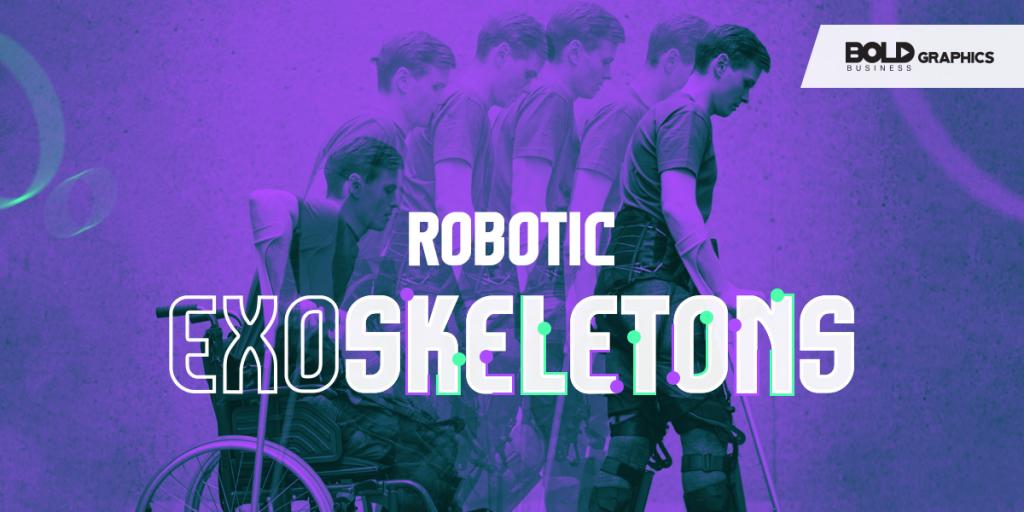
Robotics in Rehabilitation: Enhancing Disability Function Through Robotic Exoskeletons

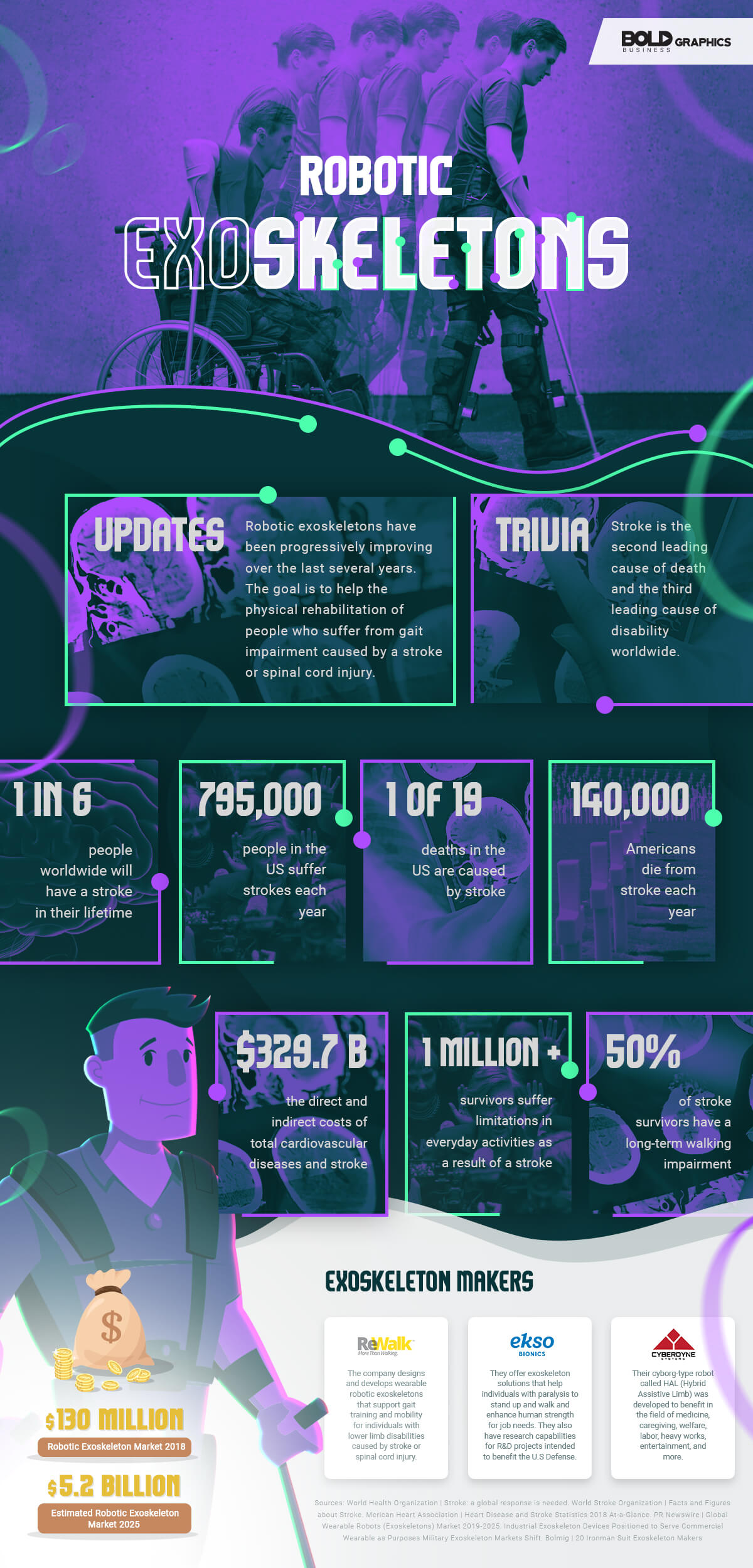
infographic thumbnail image of Robotic Exoskeletons in relation to Robotics in Rehabilitation

infographic image of Robotic Exoskeletons in relation to Robotics in Rehabilitation

More than 17 million people suffer from strokes each year. Among these stroke survivors, roughly 80 percent have some sort of gait impairment. In addition, millions of others suffer gait difficulties related to spinal cord trauma, Parkinson’s disease, and multiple sclerosis. Notably, a stroke—more often than not—results in a tremendous degree of disability and functional impairment. But thanks to advances in robotics in rehabilitation, new treatment and care options exist. Particularly, some of the most exciting are robotic exoskeletons.

Robotic exoskeletons have been progressively improving over the last several years. In fact, several companies are now in this space, offering an array of robotic exoskeleton products. Though still expensive, these devices and their functionality are improving rapidly, thanks to new technologies. And increasingly, medical communities are embracing robotic exoskeletons as part of standard care. It’s, therefore, of little surprise that robotics in rehabilitation is expected to be a mainstay of patient care soon.

Robotics in Rehabilitation Aided by Technological Advances

The use of robotics in rehabilitation has always been the focus of several medical research groups. But in the past, the capacity for robotic exoskeletons to offer practical care was limited. External robotic suits were bulky, cumbersome, heavy, and failed to meet patient care needs. However, this case has changed dramatically over the last decade or so. Today’s robotic exoskeletons are made of soft garment materials, are lightweight, and have a wide range of functionalities. As a result, robotics in rehabilitation spaces is expanding quickly.

Key technological advances have been facilitating the growth in robotics in rehabilitation. Specifically, electronics have become easier to use. Likewise, motors are a great deal smaller, have increased power, and are less expensive. In addition, gyroscopes and accelerometers are now tiny but designed with greater precision. All of these advances have enabled better functionality of robotic exoskeletons for patients.

Robotic Exoskeletons Offer Better Rehab Movements and Data

On June 4, 2019, the Food and Drug Administration approved the commercial sale of the latest in robotic exoskeletons by a company named ReWalk Robotics Ltd. Their soft robotic exoskeleton suit, called ReStore, can now be sold to rehab centers across the country. The approval came after ReWalk performed a 5-site research study showing the benefits of the robotic exoskeleton suit in stroke patients with gait impairments. Based on the discovery of improvements in functionality associated with the exoskeleton suit’s use, FDA issued clearance for the ReStore Exo-Suit’s sale. The said robotic exoskeleton suit costs just a little bit under $29,000.

ReWalk—which was founded in 2001—partnered with Wyss Institute at Harvard University in 2016 to develop and promote the robotic exo-suit. It consists of soft fabric, a lightweight waste-pack, and mechanical cables that enhance walking abilities. Through synchronized timing and movement assist, the said robotic exoskeleton improved gait propulsion and ground clearance. Also, therapists receive real-time data and analytics that dynamically aid rehab sessions.

Robotics in Rehabilitation Becoming Mainstream

ReWalk is just one of many companies that are now advancing robotic health care and robotic exoskeletons. For example, Bionik Laboratories—founded in 2013 and based in Toronto— promotes its ARKE robotic exoskeleton. This product provides lower extremity rehabilitation as well as data analytics that is supported by IBM services. Roki Robotics, based in Mexico, also has a robotic exoskeleton designed to help gait function for hip and knee impairments. And Axosuit, operating in Romania, provides robotics in rehabilitation for paraplegics through the use of a robotic exo-suit.

Overall, the approval of these medical devices in the U.S. has been slower than in other regions. Several companies are promoting the use of robotic exoskeleton devices in Europe and Asia. Bioservo Technologies, a Swedish company, has been in business since 2006. Its soft robotic exo-glove has been used throughout Europe and Japan for those with weak grip strength. Also, more than two dozen companies are currently in the robotics in the rehabilitation sector, from a global perspective. Clearly, robotics in rehabilitation is rapidly becoming a standard in patients’ rehabilitation care.

Better Outcomes Mean Greater Support for Robotic Exoskeletons

As ReWalk’s research has shown, patient outcomes have supported their robotic exoskeleton suit’s use as well as its cost. Because functional disability results in substantial support expenses and lost earnings, the potential for these medical devices are substantial. If improved functional abilities result from employing robotics in rehabilitation early, then they will assuredly continue to receive support. Given the number of companies promoting such products, this scenario would seem to be the case.

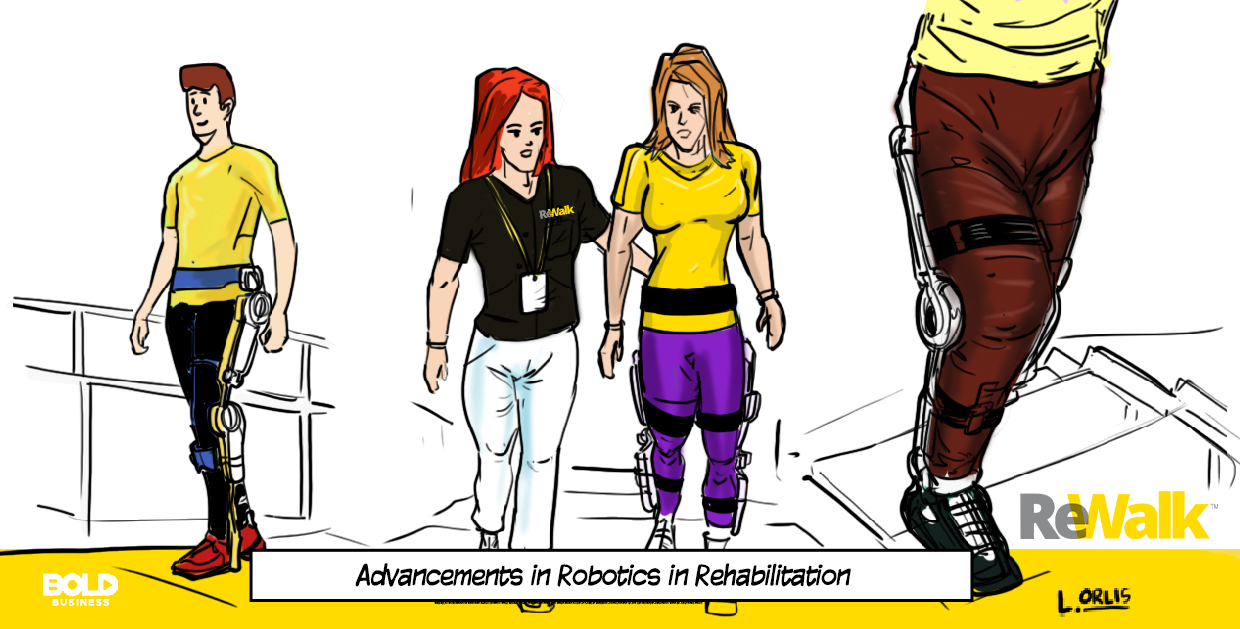
a cartoon of disabled persons being rehabilitated for walking with rewalk robotic exoskeleton
The use of robotics in rehabilitation is surely an exciting and positive venture! ReWalk will guide you through for faster recovery.

Based on such fact, the opportunities for better patient care by employing robotics in rehabilitation are exciting. Not only can it improve function in stroke and trauma patients, but it can also be utilized in other conditions. Researchers are currently exploring its use in response to cerebral palsy, Parkinson’s disease, and other conditions where motor function is affected. Thus, the potential that these new technologies offer looks to be very promising—undoubtedly pointing to the future direction of patient care.

Robotic Exoskeletons Infographic

infographic image of Robotic Exoskeletons in relation to Robotics in Rehabilitation

Rehabilitate and Recover Faster With ReWalk Robotic Exoskeleton

a cartoon of disabled persons being rehabilitated for walking with rewalk robotic exoskeleton
The use of robotics in rehabilitation is surely an exciting and positive venture! ReWalk will guide you through for faster recovery.

How can we help?

Bold Business Insights
Privacy Overview

This website uses cookies so that we can provide you with the best user experience possible. Cookie information is stored in your browser and performs functions such as recognising you when you return to our website and helping our team to understand which sections of the website you find most interesting and useful.