Bold Business Logo

Feeding the Underprivileged: Salvation Army’s Bold Move

Salvation Army, an international charitable organization, just opened their first non-profit grocery store last March 7 in Baltimore, Maryland. It is their first in a series of bold moves – DMG Foods is planned as a nonprofit grocery chain to combat so-called “food deserts” (disadvantaged neighborhoods that lack stores selling fresh produce and meats).

DMG stands for “doing the most good” – something the Salvation Army is focused and hopes will catch on quick. “If this works, Baltimore wants us to open two or three more stores,” said Major Gene Hogg, Salvation Army’s Central Maryland area commander.

Oasis in a Food Desert

The first ever DMG Foods location has a spacious, bright interior, making it almost no different from regular grocery stores. Essentially, the 7,000-square foot warehouse is an oasis in what is described as an area with a minimum household income of or below 185% of the federal poverty level – this means about 30% or so of households typically have no vehicle access.

In previous years, people had to travel about a quarter of a mile just to find a market or grocery store. DMG Foods is located right across the street from an elementary school. This makes it convenient for parents who want to pick up or drop off their kids, and then shop for meals on the same trip or drive. “The idea is to strengthen the family table,” affirmed Hogg. “We want to do more than just sell groceries.”

Baltimore’s Mayor Catherine Pugh, who was in attendance during the store’s opening ceremonies to cut the ribbon, expressed her gratitude and encouragement for the idea. “This serves as a beacon for the rest of this community,” she said. “If we can do this here, we can do this in other parts of the city.”

There are food samples, various recipe ideas, and even cooking demonstrations. Guest chefs and nutritionists from the city health department also visit from time to time. The store has an on-site butcher and deli, allowing people access to fresh meats. Maryland’s Food Bank also helps supply prepared meals and salads.

The store has a workforce development program to offer people interested in becoming employees. DMG Foods also has several special offers and discounts for people who belong to the federal food stamps program, the Supplemental Nutrition Assistance Program (SNAP).

One of the best parts about DMG Foods is that proceeds are donated to a local facility – Catherine’s Cottage. This is also run by the Salvation Army, and offers support to victims and survivors of human trafficking.

“What we’re trying to do is create an environment where the community feels welcome and where they’re engaging for the betterment of their community,” said Hogg.

While Salvation Army is positive and hopeful the initiative goes well, they cannot make a statement yet as to DMG’s success just a few days after opening. They have however received calls from all over the world inquiring about the group’s amazing efforts, and it has made them optimistic about the future. They hope to eventually open other DMG stores not just in Maryland but in other food desert areas all over the country.

Contributing Writer: Imee Malabonga

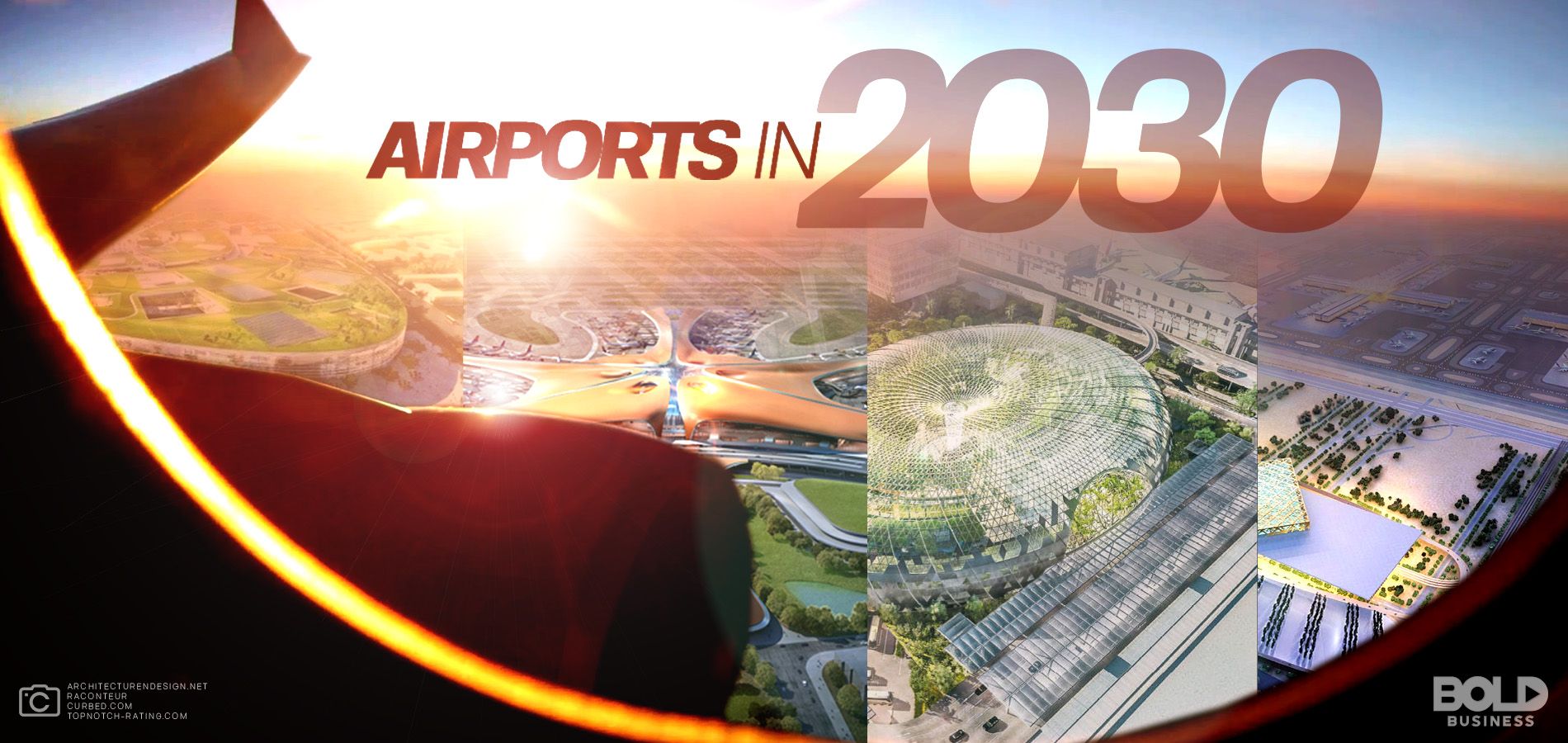
The Future Evolution of Airports: 2030 and Beyond

Today’s airport infrastructure is already falling behind and facing massive pressure. Certain major airports have exceeded planned capacity, while others are in danger of further congestion. With these in mind, those in the airline and airport industry are doing bold moves. What will the future of airport terminals look like in the next 20 years or so?

Progressive Cities’ Airports

There are two ways of dealing with the slew of airport and airline issues: upgrade current airports and airlines, and create new solutions like new smart terminals and plane models. Plenty of these airports skyrocketing themselves into the future are outside the United States. In fact, in the 2017 Skytrax awards, the U.S. had only 14 airports that made the top 100 list.


Dubai World Central – Al Maktoum International Airport

Dubai is no stranger to futuristic ideas coming to life at the present time. One of their latest bold innovations is the development of Dubai World Central – Al Maktoum International Airport (DWC). They are developing it with 12 independent, self-contained, medium-sized airports located in one site, instead of a giant hub across their 140 square kilometer (54 square mile) area. They expect to handle as many as 20 million passengers a year.

Paul Griffiths, chief executive officer (CEO) of Dubai Airports, says this makes the DWC airport one of the most “customer centric” in the world. Nobody has to walk beyond 400 meters (437.45 yards) just to get to a connecting flight. “We will be creating something that is manageable, navigable, and easy to use at Dubai World Central and it is all being enabled by technology,” he said.

“In my view we are heading in the wrong direction by building ever bigger airports,” said Griffiths. “Bigger is not necessarily better…. It inevitably means longer walking distances, less intimate experiences, and greater difficulties in customers making connections.”

Singapore – Changi Airport

Changi Airport SIN) is an industry pioneer, named the world’s best airport for the fifth year in a row. In addition to the many attractions available within, they also recently opened a “living lab” that allows Changi to create and pursue innovative ideas. They have gardens, children’s play areas, and shopping centers. Truly a world-class experience, this place is a tourist destination all its own.

Changi has a free all-day movie theater for people who want to spend some fun time during their layover. In addition, they have a gaming center where people can play Wii, PlayStation, and Xbox, as well as a LAN café – all for free as well. For people who prefer watching TV in a comfy sofa with in-chair audio, the Xperience Zone is available. The Social Tree’s webcam area has customizable, printable photos, located in Terminal 1’s transit area.

Perhaps one of the most interesting and innovative ideas the Singapore airport has is they have a Jacuzzi and swimming pool at the rooftop of Terminal 1’s transit zone anybody can use for just $17. They also have a Snooze Lounge where people with long layovers could catch a few Zzz’s on a fully-reclined seat within a quiet and isolated area of the airport.

Other Innovative Airport Features

Other forward-thinking airports have tried stepping up their games. San Francisco International Airport in California, USA has a yoga room. While nothing too amazing, it’s still one of the most unique spots in any airport. Hong Kong took a page from Singapore’s playbook, with their IMAX movie theater. Seoul Incheon has an indoor skating rink, yet another unique albeit not-so-innovative feature for an airport.

Top 10 Best Airports

Skytrax World Airport Awards ranks airports from all over the world each year, revealing some of the most interesting and boldly innovative spaces in the industry. As of 2017, this is the top 10:

  1. Singapore Changi International Airport (Singapore)
  2. Tokyo Haneda International Airport (Japan)
  3. Incheon International Airport (South Korea)
  4. Munich Airport (Germany)
  5. Hong Kong International Airport (Hong Kong)
  6. Hamad International Airport (Doha)
  7. Central Japan International Airport (Japan)
  8. Zurich Airport (Switzerland)
  9. London Heathrow Airport (Great Britain)
  10. Frankfurt Airport (Germany)

Airport 3.0: Trends of the Future

Airports today are slowly catching up to what potential is out there. With some of today’s biggest airports like DWC, Beijing Daxing International, and Istanbul New Airport accommodating about 150 million travelers annually, it is high time the industry create and follow through on the Airport 3.0 standard as dubbed by global information technology (IT) company Comarch.

Airports of the future have more than just automated checkins, biometric scanners, and bag drop kiosks – public spaces are just as important, the same way Changi Airport has been setting the trend. The use of drones and hovercrafts is not far from the future, as well as other forms of interesting technology.

“The airports of the future will fully exploit the power of new technologies, including sensors, processors, mobile apps, gamification and behavioral analytics,” said Vincenzo Sinibaldi, former business development manager at Comarch Italy. “The key is broad integration process among airlines, retailers, restaurants, cafés and parking facilities. In this model, airports can cross-sell and upsell to passengers.”

Richard van Wijk of Nokia suggests that modernizing communications within the airport is a crucial step into becoming an airport of the future. “Commercial aviation is a very competitive business,” he said, “and the airports that offer the most attractive facilities and amenities – along with operational excellence – tend to win out in the competition for routes and travelers.”

“An airport should be one of the most seamless experiences in modern life,” concurs Max Oglesbee, head of Intersection’s Client Strategy department. While it’s not yet happening as quickly as it should to catch up with the demand of many travelers, a number of today’s airports have already morphed into interesting, public spaces with plenty of things to do before and in between flights.

As far as security is concerned, airports are trying new technologies as well. In the future, there might not even be check-in desks and long security lines – rather, passengers’ identities may be confirmed via biometric screening. People no longer need to present security documents, as advanced screening tech will help ensure passengers a safe trip minus the long, tedious stops requiring them to take off their shoes and belts or scan bags, laptops, and toiletry bottles.

“Imagine an airport with no check-in, no immigration, and discreet non-intrusive security all enabled by a single identity database securely held in the cloud and available to those who currently need physical evidence of our identity as we travel,” Griffiths said during the International Air Transport Association (IATA) World Passenger Summit in Barcelona. “The possibility then re-emerges to reorder the entire travel process around the customer’s service, rather than around the convenience of everyone else.”

Another interesting point is the thought of a fleet of urban flying cars – rather than using helipads, there may be airports or terminals exclusively for such vehicles. Companies like Porsche and Volkswagen’s Italdesign Giugiaro collaboration with Airbus called “Pop.Up” have both been investing in the idea. Perhaps in the future, even space travel will become the norm, shrinking down the idea of individual launching pads into an airport for such services.

Coffee Waste Fueling the Future

Used coffee grounds are recycled and reused in many different ways, but did you know that the majority of the material still gets thrown away? That is about to change, thanks to the bold idea of coffee grounds biofuel.

Scientists from Lancaster University in the United Kingdom have found a simplified way of converting used coffee grounds into biofuel while reducing the time and cost of doing so, making it a viable source of fuel.

“A huge amount of spent coffee grounds, which are currently just being dumped in the landfill, could now be used to bring significant environmental benefits over diesel from fossil fuel sources,” said Dr. Vesna Najdanovic-Visak of the Lancaster team.

Another group of bright minds from Shell and LEZÉ the Label, a Vancouver-based sustainable apparel company, are creating a more sustainable future using coffee grounds as well. In collaboration with clean tech company bio-bean, as well as Argent Energy, they have created the B20 biofuel. This bold innovation is a fuel that will help tackle London’s issues with emissions and air pollution.

Fixing the London Air Pollution Problem

London air pollution levels in 2017 were at an all-time high, even just five days after ringing into the New Year. It was not a one-time thing either, as it has been happening regularly. In fact, 60% of the city’s 97 pollution-monitoring sites broke legal limits in 2016, as revealed by a Kings College London study.

Air pollution has many adverse effects on human health, including strokes, heart disease, and diabetes. For children, it could stunt their lung growth by up to 10% and even cause asthma in healthy kids. With such statistics and the number of health issues arising, the city government and various bold innovators felt compelled to fix the growing air pollution issue.

Arthur Kay, founder of bio-bean, explained how the B20 biofuel can help power London buses without any need for modifications, all while reducing emissions. With the average Londoner drinking about 2.3 cups of coffee daily, this produces annual coffee waste exceeding 200,000 tons. bio-bean sees this as an opportunity to collect, dry, and process coffee grounds, extracting coffee oil that can be used on its own or blended to create the B20 version with Argent Energy. This effort is part of Shell’s #makethefuture campaign supporting companies and entrepreneurs focused on energy innovations with positive environmental and global impacts.

Coffee -- good for the body, and now for the environment, too.
Coffee — good for the body, and now for the environment, too.

“With the support of Shell, bio-bean and Argent Energy have created thousands of liters of coffee-derived B20 biodiesel which will help power London buses for the first time,” said Kay, who won Shell LiveWIRE’s Innovation Award in 2013 for the coffee grounds biofuel idea. Bio-bean also secured a deal with Network Rail to collect coffee ground waste from London’s seven largest train stations, and is planning for even greater expansion in the future. “It’s a great example of what can be done when we start to reimagine waste as an untapped resource.”

Sinead Lynch, Shell’s UK Country Chair, expressed support in the idea. “We’re pleased to be able to support bio-bean to trial this innovative new energy solution which can help to power buses, keeping Londoners moving around the city — powered in part by their waste coffee grounds,” she said.

London’s various coffee shops have enough waste to power 15,000 homes. In a sense, people who drink coffee aren’t just fueling themselves – they are helping produce raw material for a green fuel resource.

More than Just Coffee Grounds Biofuel

bio-bean has other ideas for spent coffee grounds. To get to where the company is now, they produced Coffee Logs, which include biomass pellets and biomass briquettes. “The Coffee Logs have been great at demonstrating the full circle. People drink the coffee, we collect their waste coffee grounds and then provide them back with the logs that they can use to heat their homes,” Kay explained.

The coffee logs can be used in fireplaces and stoves instead of using up wooden logs. “So far, it is the Coffee Logs that our business is built on,” he said. “The biofuel is more of a technical demonstration of what can be done in the future.”

There are other companies making use of coffee grounds in bold ways:

  • Wound Up – a new wire filament used in 3D printers made up of recycled coffee grounds, created by c2renew and 3Dom USA. They 3D-print coffee cups literally from coffee.
  • Huskee Cup – created by Saxon Wright, co-owner of Pablo and Rusty coffee brand. The company makes reusable, stackable coffee cups made from sustainable materials that are comfortable to hold, durable, and keep coffee warmer longer.
  • Kaffeeform – created by Julian Lechner, the company also creates espresso cups and saucers from coffee grounds mixed with natural glues and sustainably sourced wood.
  • Starbucks Japan – mandated by law, Starbucks in Japan turns their used coffee grounds either into cattle feed or fertilizer via the Coffee Grounds Recycling Loop.
  • Ghidaq al-Nizar – this Indonesian artist makes amazing coffee “paintings,” often on dried leaves, creating unique pieces of art.
  • RITI Printer – the company has a brand of eco-friendly ink, from either used coffee grounds or old tea leaves.

Finding value in waste is a bold idea that’s also good for the environment. Using spent coffee grounds as fuel or in other unique ways gives new meaning to the phrase, “one man’s trash is another man’s treasure.”

Contributing Writer: Imee Malabonga

Technology Ushering Drone Pilots Into A New Era Of Flight

Drone racing is a new sport airing its third season on ESPN, ESPN2, TSN, Sky Sports Mix for UK fans, and Prosieben Maxx for German enthusiasts. The sport made a stunning impact in the sports arena during its broadcast in 75 countries during the second season. Much of this success is due to technology ushering in professional drone racing pilots who have become popular in the league.


According to the Drone Racing League (DRL), skilled participants use quad-copter drones with speed of up to 120mph in three-dimensional courses. The four rotors give a drone more lifting power and better maneuverability. Pilots fly these drones, akin to the Red Bull Air Race, using the first-person-view (FVP) and steer through tight and challenging slalom courses at high speeds.

There are drone racing independent leagues and other competitions in the US and abroad, but the DRL remains a global phenomenon being the most prestigious and sought-after organization with highest-priced tournaments since its first race in 2015.

Drone racing is more than just a game for the pilots. Nicholas Horbaczewski, founder and CEO of DRL, explains that racers do not just race, but they also work on the hardware and develop their own drones.

It is a hobby and a profession, according to Horbaczewski that attracts a wide variety of participants, like these pilots:


  • Gabriel Kocher (aka Gab707) from team Canada appears regularly on the DRL TV show. He has landed on top spots in both international and national competitions. Kocher is a Ph.D. candidate in Materials Modelling.
  • World Champion Jordan Eiji Temkin (aka JET) tells everyone that he “likes getting paid to play with toys”. He used to work three jobs and left them all to do full-time drone racing.
  • Nick Willard (aka Wild Willy) is another top DRL pilot. Aside from flying drones, he is a fourth year Aerospace Engineering student at Georgia Institute of Technology.

Becoming a full-time DRL pilot may be a coveted full-time job, but just like Formula 1 race drivers who are known to be the best in the world, the bar for drone pilots is purposely set too high. Contracts could go as high as $100,000 that is why some pilots have left their jobs to fly drones full time.

How Is The Drone Technology Ushering Pilots Into A New Era Of Flight?

Horbaczewski said, “We have incredible, highly agile devices that we can fill so many functions. And yet we’re waiting for this world of self-piloting, self-flying drones. What our technology enables us to focus on is a world where pilots are in control of these drones.” He further explains, “Think about something like a first response or drones dropping off defibrillator unit or responding to an accident. Or a firefighting drone going to inspect the fire before the trucks can get there. We can do that today with human controlled drones.”

The demand for drone pilots is increasing and it is creating a bold impact on different industries. According to the report “The Economic Impact of Unmanned Aircraft Systems Integration in the United States”, an estimate of 100,000 new jobs will be available through 2025.

Drone Pilot Schools Emerge

To prepare for the influx of jobs in this new drone industry, schools like the Phoenix-based Unmanned Vehicle University (UVU) focuses on training drone pilots where graduates take a drone pilot license called FAA 107. Paul Dragos, dean of the school, says that there is a huge number of jobs and the number is just .

Another aviation school that caters to drone training is the Global Drone Solution. The CASA-approved school provides drone pilots five hours of actual practical flying skill and teaches them aviation theories. The main function of CASA is to conduct safety regulation of civil air operations in Australia, and to provide safety education and training programs in cooperation with the Australian Transport Safety Bureau.

Industries that hire drone pilots include engineering firms, survey firms, real estate, social media companies, wildlife and nature projects, and emergency services.

One of the great things about drones is it gives everyone a chance to become a pilot. Anyone from beginners to skilled pilots all have a chance to develop careers with drones. Many people are learning to fly drones to expand their already existing careers. For instance, people from the creative industry are learning to become drone pilots to use them in creating more innovative .

A key question is, what is the potential earning potential as a drone pilot? As in any other industry, highly skilled drone pilots, who are willing to travel, according to UVAIR, will likely earn more than the others.

Mahmood Hussein, a drone trainer, and pilot, said, “The demand for drone use, in a wide variety of businesses, is absolutely skyrocketing. Drone are transforming industries such as plumbing, mining, trades, and even transport and delivery. For people pursuing a career as a drone pilot, the rewards are great. The average salary of a drone pilot is already around $100,000 with the top end nudging $150,000 a year.

In an estimate by Jordan Rising, Director of Flight and Technology at Flight Evolved, in other specialized drone pilot roles like survey and engineering firms may pay pilots $50,000 to $70,000.  For drone pilots who can’t do it full time, there are weekend gigs that pay anything from $2,500 to $7,000.

The Incredible Evolution of Drones

Drones were first used in military services, and from there they have changed in so many ways – design and mechanism included — and are now are part of common services like in delivery and monitoring.

“I like to say we’re raising a generation of pilots. Everyone I know under the age of 15 has a drone or wants a drone. We’re creating a whole generation of people who know how to fly,” Horbaczewski said.

The Federal Aviation Administration (FAA), a national authority in the United States presented a report that in just a span of 15 months more than 770,000 drone registrations have been filed.

The mandate to register drones to FAA began in December of 2015, allowing them to control the growing industry of unmanned aerial vehicles. The National Authority for Civil Aviation is currently assessing different devices in order to identify drone operations that have not been authorized.

DRL is on the cutting edge of the Drone industry and pushing the limit on performance. The popularity of the sport is helping to raise interest in the sport as well as recruiting a new generation of pilots. This is a global phenomenon and expected to grow in the coming years as jobs are available across industries that now use drones as part of their services.

Contributing Writer: Frances Beldia

How can we help?

Bold Business Insights
Privacy Overview

This website uses cookies so that we can provide you with the best user experience possible. Cookie information is stored in your browser and performs functions such as recognising you when you return to our website and helping our team to understand which sections of the website you find most interesting and useful.