
Bold Business Logo

AI Lets Facebook Robots Learn Human Reactions After Watching Skype

Scientists working for Facebook developed an expressive robot that can learn human reactions by watching Skype. According to New Scientist, the robot’s animation is controlled by an artificially intelligent algorithm, a bold idea that could possibly change the landscape of human interaction.

Despite the test proving successful, the strength of the research has yet to be verified. Reports state that the animations were quite basic, and “it’s not clear whether a humanoid robot powered by this algorithm would have natural-seeming reactions.”

This algorithm picked up human-like reactions after studying hundreds of videos of Skype conversations. During tests, the robots managed to pass as humans.

“To optimize its learning, the algorithm divided the human face into 68 key points that it monitored throughout each Skype conversation. People naturally produce nods, blinks, and various mouth movements to show they are engaged with the person they are talking to, and eventually the system learned to do this too,” the website states.

In addition, the AI was able to study videos of humans speaking, and then express its own reaction in real-time. For example, if someone was angry or mad, the bot would tilt its head or become reactionary; it also managed to mimic laughing and copy head movements.

“The Facebook team then tested the system with panels of people who watched animations that included both the bot reacting to a human, and a human reacting to a human. The volunteers judged the bot and the human to be equally natural and realistic,” researchers stated.

Despite the test proving successful, the strength of the research has yet to be verified. Reports state that the animations were quite basic, and “it’s not clear whether a humanoid robot powered by this algorithm would have natural-seeming reactions.”

Robot learning from Skype - AI and Facial Recognition

Experts also state that copying facial expressions is not the key to AIs learning the characteristics of humans, because that will also take emotions and expressions derived from a thought process to form a more human-like existence.

More leading tech firms are now switching over to voice and facial recognition software. Apple recently announced the launch of its new iPhone X smartphone which comes with a facial recognition access platform instead of a fingerprint scanner or PIN code.

Apple have also managed to develop an “animoji” which can copy human facial expressions. The user can send the emoji to their friend using his or her voice and facial expressions.

Facial recognition scanners are also being used more in home security systems, public access points, and other devices to better identify the user. It is estimated that by 2040, there will be at least a 70% increase in those using voice and facial recognition software globally.

Despite the criticisms of Facebook’s recent tests, the study will most certainly make a bold impact in the tech industry, and alter the way AI and facial recognition software is developed. Apple’s new software will also provide a solid base for other tech firms to develop their operations toward a more technologically sophisticated future.
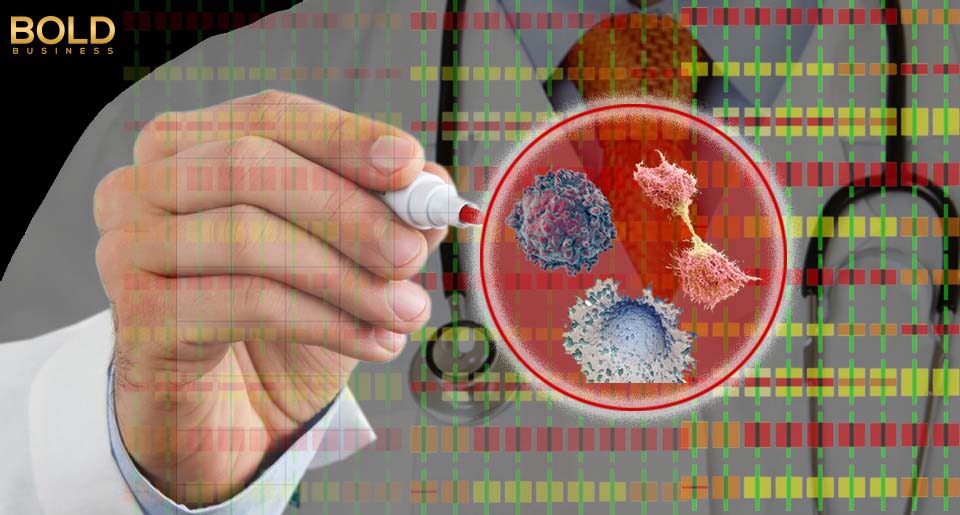
A Bold Idea: MasSpec Pen Detects Cancer in 10 Seconds

Scientists invented a new pen-like tool called “MasSpec Pen” that can detect cancer in just 10 seconds. Researchers at the University of Texas (UT) say their handheld device MasSpec Pen can identify cancerous tissue in record time, creating a potentially bold impact in the world of cancer research.

Any time we can offer the patient a more precise surgery, a quicker surgery or a safer surgery, that’s something we want to do.

According to CNBC, the new “MasSpec Pen” speeds up the testing process by 150 times and will even aid doctors when it comes to removing the tumor by pinpointing its exact location more accurately.

“If you talk to cancer patients after surgery, one of the first things many will say is ‘I hope the surgeon got all cancer out,’” said Livia Schiavinato Eberlin, an assistant professor of chemistry at UT Austin, who created the study and led the research team.

“It’s just heartbreaking when that’s not the case. But our technology could vastly improve the odds that surgeons do remove every last trace of cancer during surgery,” Eberlin added.

The study was conducted using 253 human cancer patients, and the average time taken to determine whether they had cancer was 10 seconds each. The MasSpec Pen used as tests were also shown to be accurate 96% of the time, test subjects with breast, lung, thyroid, and ovarian cancers were used in the study.

According to the research team, each type of cancer has its molecular structure which acts kind of like a fingerprint, as it has its unique identifier. The “MasSpec Pen” works by being placed onto suspect tissue, it releases a drop of water onto the area which absorbs molecules to be tested later on.

The MasSpec Pen extracts the water containing the molecules and then tested in a more massive machine called a mass spectrometer, which analyzes the molecules and determines whether cancer exists. The MasSpec Pen will alert the doctor whether the patient is suffering from cancer by merely displaying the words “Normal” or “Cancer” on a display screen. The data gained from the molecular breakdown can also determine the type of cancer and sometimes pinpoint the name of a subtype of cancer evident.

“Any time we can offer the patient a more precise surgery, a quicker surgery or a safer surgery, that’s something we want to do,” said James Suliburk, head of endocrine surgery at Baylor College of Medicine, also part of the research team.

“This MasSpec Pen does all three. It allows us to be much more precise in what tissue we remove and what we leave behind,” he added.

Scientists behind the technology have filed a US patent application, and the MasSpec Pen is now awaiting on full government approval so that it can be used in the healthcare industry across America, and further afield.

It takes bold ideas like this to push the healthcare industry forward and to ensure that the medical profession can fight diseases that so many of us battle daily.

Secrets of Life Extension from Fruit Flies

Scientists at University of California, Los Angeles (UCLA) report they have been able to “significantly slow aging” in fruit flies, and in the process, “substantially improve” the insects’ health. This age-delaying process, if successful, will be the secrets to longevity and will have various bold impacts in the health and medical fields, among others.

By exploring multiple mechanisms that lead to aging in fruit flies, the UCLA team hopes to eventually develop a technique to slow aging and delay aging-related diseases in humans.

Suppose we could slow or even reverse the aging process in humans. We would likely delay the onset and progression of fatal diseases. The social return could be tremendous. As the population ages, the cost of healthcare increases exponentially. Age-associated illnesses (heart disease, cancer, arthritis, repertory diseases, and Alzheimer’s to name a few) require prolonged and expensive treatments. The cost to society in terms of both human suffering and financial burden is enormous.

If we could slow the aging process in humans, society would reap the benefits of a healthier, more productive population. A study in the Health Affairs journal (October 2013) suggests that in the US alone, we could save around $7.1 trillion over 50 years by delaying aging.

The results of the UCLA research on aging in fruit flies holds great promise for improving human lives. Researchers commonly use fruit flies in preliminary studies that may lead to benefits to people because 75 percent of the genes that cause disease in humans are also found in the fruit fly. Additionally, fruit flies have a short, simple reproduction cycle. Symptoms of disease and aging and effects of treatments can be observed in a matter of days.

UCLA Study on Aging

The UCLA research concentrated on the changes in mitochondria as the fruit flies aged. Mitochondria are organelles that control cell growth found in the cytoplasm of most cells. As the mitochondria age, they tend to become damaged and begin to accumulate in the brain, muscles, and other organs in the body. David Walker, UCLA professor of integrative biology and physiology and senior author of this study, explains, “When cells can’t eliminate the damaged mitochondria, those mitochondria can become toxic and contribute to a wide range of age-related diseases.”

Fruit fly cartoon with old man head. An illustration to the secrets of longevity study.

The scientists observed that a protein called dynamin-related protein 1 (Drp1) declined as the fruit flies aged. With the reduction of Drp1, cells had difficulty removing damaged mitochondria. By increasing the levels of Drp1 in the fruit flies, the researchers found that the cells were able to break up the damaged mitochondria into smaller pieces and eliminate them from the body. As a result, the flies were rejuvenated becoming more energetic. Following the treatment, lifespans for female flies increased by 20 percent while that of males increased by twelve percent.

The researchers discovered that while Drp1 was essential to breaking up the damaged mitochondria, another mechanism was responsible for enabling the cells to eliminate the damaged mitochondria. The flies’ AuTophaGy related 1 gene (Atg1) is responsible for cells’ ability to dispose of damaged mitochondria.

The scientists also discovered another way to extend lifespan and improve the health of the fruit flies. A protein called Mitofusin (Mfn) causes the mitochondria to fuse together into larger pieces making damaged mitochondria removal. The researchers recognized that by turning off the release of Mfn, the mitochondria would be easier to remove. Anil Rana, UCLA project scientist, and the study’s lead author, states, “You can either break up the mitochondria with Drp1 or prevent them from fusing by inactivating Mfn. Both have the same effect: making the mitochondria smaller and extending lifespan.”

By exploring multiple mechanisms that lead to aging in fruit flies, the UCLA team hopes to eventually develop a technique to slow aging and delay aging-related diseases in humans. At least one bold idea Walker would like to see come to fruition is the development of pharmaceuticals that would mimic the effects of Drp1.

One day, Walker and the UCLA team’s bold ideas could result in humans living longer, healthier and more productive lives. In the meantime, the UCLA biologists can demonstrate they can slow aging and extend the lifespan of fruit flies.


UAE Students Develop Pocket-Sized Braille Reader

A group of students from the Middle East have developed a pocket-sized Braille reader, a bold idea for braille devices for the blind that can help the visually-impaired digest everyday reading materials. Students from the UAE University have developed “Braille Eye,” a built-in camera device that can take photos of text then turn it into Braille.

The next stage of the project is to have visually impaired people taking the device and using it in their daily lives and to see what feedback they give us.

“This device is intended to help visually-impaired people around the world become more independent in their daily lives. It will mean they don’t have to wait for Braille versions of books to be published,” Faraj Al Faraj, one of the developers told Gulf News.

“The device can be used in supermarkets, to read bills, or in restaurants, to read menus. Braille Eye is designed to help them read anything, any time, and anywhere,” he added.

The team are currently developing a working prototype which has been in production since May 2016, and can translate 40 languages into Braille.

“The device is adjustable, and can translate at least 40 different languages including Arabic and English,” fellow developer Mahmoud Abdul Malik said.

“The technology we use to convert the written material is called optical character recognition,” he added. “It is a proven and reliable technology that gives us an accuracy of 98 percent.”

Book with a Braille Translator on it, sample of braille devices for the blind.

The concept behind the invention is for the user to point the device at the reading material – for example, if the user would like to read a flyer – and the camera will take a picture of the text then translate it into Braille on the top side of the device, which has a refreshable Braille display.

One potential flaw, which as of yet has not been accounted for, is how will the visually-impaired user be able to pinpoint the text in order to take the picture? The team say it’s all about trial and error in the upcoming tests.

Developers are now ready to test the device on members of the public to gain valuable feedback, and tweak their invention accordingly. The students have already invited a group of visually impaired people to try the device, and are hoping to bring it to market in the very near future.

“The next stage of the project is to have visually impaired people taking the device and using it in their daily lives and to see what feedback they give us.

“Once we get their opinion, we will make any improvements based on their recommendation, and look to have the final developed device made available for the market,” Malik added.

It takes bold ideas like these to push the boundaries of innovation, and to better the lives of millions of people around the world. Not only will “Braille Eye” ensure the visually-impaired are more connected, but it will make life easier for so many plagued by darkness.

How can we help?

Bold Business Insights
Privacy Overview

This website uses cookies so that we can provide you with the best user experience possible. Cookie information is stored in your browser and performs functions such as recognising you when you return to our website and helping our team to understand which sections of the website you find most interesting and useful.