Bold Business Logo

USDA Strategic Plan: USDA Turns to Private Sector to Make a Bold Impact

Government research institutions developed a great deal of cutting-edge technology—like the Internet and satellites—over the years. But government researchers know that ‘good ideas’ are not enough. Ideas that sit on the shelf—for the reason that real people aren’t aware of them and there is no one to distribute those great ideas—are wasted opportunities. These days, even the U.S. Department of Agriculture (USDA) is aware of the fact that it takes a private business to get mass traction and widespread distribution. To make that happen, it is—in alignment with its USDA strategic plan —taking some of their best ideas and putting them in private hands for maximum impact.

Other Details Related to the USDA Strategic Plan

The USDA is not only about agriculture per se; ultimately, it is about food. The organization conducts research concerning a variety of programs, such as nutritional standards and animal production. In its annual report on technology transfer, the Agriculture Department included 224 new inventions and 109 patent applications for a wide range of products.

USDA Undersecretary Ann Bartuska defines technology transfer as developing a product and then transferring it to somebody who can use it. With 16 agencies, the USDA—in connection to its USDA strategic plan —is also collaborating with the private sector through special agreements. One form of cooperation is the Cooperative Research and Development Agreement (CRADA), which includes patents, licenses and exploratory work. According to the USDA, these technologies have far-reaching applications. The department is also developing its own research on genome sequencing, pest protection, quarantine, infestation tracking, as well as disease transmission. However, given the world’s population problems, the most important agricultural-related research is regarding food—namely, how to create the capability to produce sustainable food sources.

Sustainability is high on the USDA’s priority list with an emphasis on the environment and water quality. Bartuska expects that future reports will dwell on an increase in water use, which is inevitable. The use of various sensor technologies and aerial drones have helped to monitor said water use. As more research is conducted, the effectiveness and efficiency of these technologies will undoubtedly increase.

a photo containing an image of the USDA logo and slices of meat being tested in the background, depicting the USDA strategic plan in action
The most important agricultural-related research is about food—i.e., how to create the capability to produce sustainable food sources.

On the USDA Strategic Plan: Ideas Meet Technology

The various research projects the USDA is currently funding and developing ultimately impact food safety. Their return on investment is something the department is extremely proud of. Based on a USDA analysis, for every dollar invested in research, $20 is returned to the public. This case is only done through the USDA strategic plan of going into various agreements with the universities, research labs, private companies, as well as other government agencies. Cooperative research and development agreements can be transferred to the private sector in the form of licenses. These allow companies to develop products based on USDA research.

To further the success of these cooperative ventures, the private sector can develop products and services that directly benefit the public. At the same time, this scenario also helps promote the “Made in America” theme. With private sector development, the product implementation is faster, all while simultaneously helping to create jobs. With faster implementation, these benefits can be brought to those who need it most, in the shortest possible time, without any risk to the USDA.

A Bold Move for a Bold Impact

Research is not merely a concern for universities or private tech firms. Whether these studies are about bridge sensors, lights to detect Salmonella or even a device to identify bee mites. They may have identified a need. However, the public may disagree and not buy into the product or service. In contrast, agricultural-related research is about food and people. Two aspects of society that will continue to be essential for a viable lifestyle.

The wider these technologies are distributed, the greater the impact will be. With its formulated USDA strategic plan, USDA is taking a bold step in putting these ideas out to the private sector for implementation.
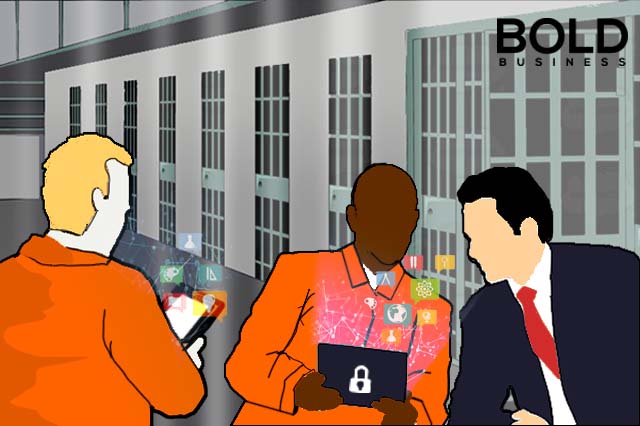

Proper Education Programs for Inmates Provided by Edovo

Getting former inmates back on track after being in prison for years has always been a big problem. Lacking marketable skills, it’s often difficult for ex-convicts to get jobs that allow them to support themselves and their families. They are generally prohibited from receiving any welfare benefits or student loans, so they are often left with very few options. A startling amount ends up back in jail.

The goal of Edovo is to provide inmates with life skills, work training, and education programs that can help them to go straight when released from prison.

Edovo, based in Evanston, Illinois startup, is taking bold action to use of technology to give inmates a real chance at survival in the outside world. They are offering a wireless and tablet-based learning platform for inmates. This could break the chain of recidivism that plagues those trapped within the prison system.

Edovo’s Mission Statement is: “to provide meaningful access to proper education programs that can unlock the potential of every person affected by incarceration.” The company, which was named one of the most innovative organizations of 2016, is on the road to doing this with the use of tablets running their platform.

Proper Education Programs Can be the Key to Cutting Recidivism

Forbes reported that more than 50% of former inmates

Proper education programs are already in place in three states: California, Alabama and Pennsylvania. It also has been expanded to include recently released inmates. There are now more than 4,000 users inside jails.

Edovo founder Brian Hill wants to expand the education programs even further. He says that they have always planned to “improve the criminal justice system,” both in jail and after release.

The tablets are going to be used for educational programs, but also contain other limited functionalities, including being used as telephones. The tablets require secure wireless networks inside the prison facilities. This connection is provided and controlled by Edovo. However, there will be no outside internet access nor any external communication, for security reasons. The tablet itself is designed to be rugged and durable with a custom casing. It also has real-time tracking and allows administrators to control both content and usage.

Learning Behind the Bars

The device provides users access to curated material including Department of Labor documentaries for career training. Other content created by Edovo includes cognitive and behavior therapy, as well as courses which are preparatory to GED and other materials. There are courses for vocational training as well as academics, and programs about parenting, substance abuse, and anger management. The continued use of the device within the facilities enables the inmates to access approved movies, music, and magazines.

One aim of the program is to provide inmates access to technology, where they can learn and keep up with the outside world. This also helps ensure that inmates are interested in learning even as they use their free time on the tablet. In doing so, the inmates are kept occupied and engaged. It relieves the boredom, which is prevalent in prisons, and that helps to reduce inmate violence.

The goal of Edovo is to provide inmates with life skills, work training, and education programs that can help them to go straight when released from prison. Recidivism is a huge problem in the U.S., and one of the reasons for the exploding prison population. The United States has the most significant number of people behind bars.

The lack of education and job skills that led inmates to land behind bars in the first place are not addressed during their time in prison at all. Generally, they find themselves released with one more black mark that makes it even harder to find productive work, a place to live, or any means to survive. If Edovo can make a dent in that, and help inmates become useful, productive citizens, they will have done a good deal to improve society.

Also, the cost of the tablets will not be passed on to taxpayers. The Alabama Department of Corrections, for example, will be making use of revenue from phone calls and commissions from the telephone contract to fund the project.

Edovo is taking bold action, and it remains to be seen if this will have a bold impact.


Crime Prediction Algorithm That Can Reduce Murder Rate

Is it Minority Report, or a Practical Solution? Can Crime prediction Algorithm Reduce Murder Rate?

The Chicago police department has come up with a bold idea to fight crime by using a computer algorithm that can predict illegal activity. If successful, it could have huge impacts in cities across the country.

In fact, they are already proving to be a success in cities like Chicago. In January to July, the number of shootings in the 7th District fell by 39% in one year.

Chicago’s South Side police headquarters installed a newly equipped control room where officers scan digital maps to see where a crime is likely to happen next.

According to the Big News Network, the 7th District is using an advanced new technology called HunchLab, a predictive policing program designed by Philadelphia-based firm Azavea.

“It combines crime data with factors including the location of local businesses, the weather and socioeconomic information to forecast where crime might occur, and the results help officers decide how to deploy resources,” the website writes.

The police will not reveal how their system has been compiled in case it reveals too much, but what they have said is that the algorithm looks at eight factors including prior drug arrests and gang affiliation to assign potential (or already convicted) criminals a number between 0 and 500. The higher the individual’s number, the higher the risk.

The algorithm also uses the Strategic Subject’s List, which is “a database of individuals likely to be involved in shootings that was developed by the Illinois Institute of Technology.” Furthermore, ShotSpotter Inc, the gunfire detection system; which uses sensors to pinpoint gunfire, is also being used.

The police department is hoping the new computer system will help them reduce crime in the region, and stop the criticisms they receive for how the department conducts its operations.

Early Indications Show Positive Results

Earlier this year, Bold Business reported on how a new internet-based system is tracking emergency 911 calls to pinpoint locations where emergencies are most likely to happen in Philadelphia.

Map of Districts and Police in The Crime Prediction Algorithm

Virtua uses historical data from past 911 calls, factoring the time of day, weather and traffic conditions to highlight areas most in need of emergency response units. Virtua’s computer system predicts when and where an emergency may happen.

The system highlights areas where emergency activity is most prevalent, and ensures units are ready within close proximity of the problem areas. Virtua currently has 13 paramedic units using GPS locators which are connected to a central system that sends the latest updates direct to their onboard computer systems.

According to reports, computer algorithms are slowly being picked up by leading emergency response units across America.

In fact, they are already proving to be a success in cities like Chicago. In January to July, the number of shootings in the 7th District fell by 39% in one year.

Additionally, the murder rate has dropped by 33% in the 7th district, while the rest of the city has seen an increase.

According to official data, three other districts where the technology is being used has seen between 15% and 29% fewer shootings, and 9% to 18% fewer homicides.

Experts say these numbers are evidence that computer algorithms are helping emergency services improve their operations, and the systems could be rolled out across the United States in due course. With this bold new idea, law makers as well as the police force hope to take substantial steps toward decreasing national crime rates. However, this technology will need to be coupled with a modernized legal reform to have a chance of long-term success.

Red-Tape Derails Hyperloop?

Elon Musk’s bold idea for a subsonic train may not be as far-fetched as it seems. The stuff of science fiction, surely; but in the end analysis, perhaps more science than fiction.

It isn’t the technology of Musk’s ability to complete the Hyperloop that is in doubt. Instead the problem is “rapidly” as in nothing is ever rapidly when it comes to government permits and infrastructure.

In 1863 Jules Verne wrote a novel called “Paris in the 20th Century.” His projected 1960s setting described a dystopian future where culture lagged behind technological advances. Among the many technological wonders were internal combustion powered cars, powered vehicles, glass skyscrapers, high-speed magnetism and compressed air powered trains, electrically illuminated cities, elevators, fax machines, computers and an internet-like communication system.  Verne’s publisher considered these advances so unthinkable, he refused to release the book.

Sometimes great ideas are ahead of their time. Is it possible that Hyperloop Transportation will fail to be built, because bureaucrats lack the imagination to be willing to go forward? Perhaps, but usually science wins out.

Just as the last 150 years have validated Verne’s bold imagination, almost daily, we see technology turn science fiction into science fact.

In 2013, Elon Musk, of Tesla and Space X, presented a bold idea for a vacuum-and-maglev-powered hyper speed train that would travel through a tube. Under the plans, the Hyperloop would transport passengers in aluminum pods traveling up to 760 mph.  In truth, Musk’s idea is a revisualization of a 1910 design by American rocket pioneer Robert Goddard.  Although never built, Goddard’s design showcased a train that floated on magnets inside a vacuum-sealed tunnel and would travel from Boston to New York in just 12 minutes.

In a 2013 white paper, Musk presented the concept of the Hyperloop and issued a challenge to other tech companies to commercialize the project. At the time, Musk had too many irons in the fire to chase that particular dream. Several startups enthusiastically took the bait.  Hyperloop One (Shervin Pishevar, co-founder and executive chairman) and Hyperloop Transportation Technologies (HTT) (Dirk Ahlborn, CEO) appear to be the closest to making the Hyperloop a reality. Ahlborn expects to see a working Hyperloop propelling passengers across vast distances in pods at speeds of up to 750 miles per hour within the next three or four years.

Hyperloop Transportation Vs. Regulators?

On July 20, 2017, Musk unexpectedly re-entered the picture. In a surprising tweet, he notified the world he had “Just received verbal government approval for The Boring Company to build an underground NY-Phil-Balt-DC Hyperloop. NY-DC in 29 mins.”  (The Boring Company is Musk’s latest venture, an infrastructure and tunneling company founded in late 2016.) After his tweet set off a firestorm of interest, Musk toned down his message, stating, “Still a lot of work needed to receive formal approval, but am optimistic that will occur rapidly.”

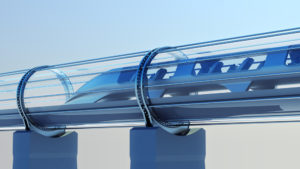
rendering of a hyperloop train

It isn’t the technology of Musk’s ability to complete the Hyperloop that is in doubt. Instead the problem is “rapidly” as in nothing is ever rapidly when it comes to government permits and infrastructure.

In fact, as evidence, in January 2017, a group of MIT students demonstrated that physics and engineering supported the viability of the Hyperloop by building a reliable pod that is capable of magnetic levitation and tube travel and is scalable.

However, in spite of positive statements from Musk and his Boring Company spokesperson about “receiving verbal support from key government decision-makers for tunneling plans, including a Hyperloop route from New York to Washington DC,” much more concrete steps must be taken to make the Hyperloop happen. Those steps take considerable time and money.

So imagine Musk’s bullet train speeding through the Hyperloop at 750 mph then bam, that vision runs up against a bureaucratic wall. That is more likely the reality the seemingly fantastical idea faces. To get approval to build gigantic, multi-billion dollar, multi-state infrastructure projects in the US America requires overcoming a series of enormous hurdles.

First, the players in every municipality along the route must buy into the project, and property must be procured. Musk is hoping that ginning up support for the idea among the commute-weary populace will generate enough heat to get the politicians on board. But that’s just the first hurdle.

Feasibility and environmental impact studies must be conducted. The project must comply with the appropriate federal and state regulations, and necessary permits obtained.

And then there is the not so small task of acquiring financing for a project that could require billions of dollars. All in all, decades could easily pass before the first shovel full of dirt is turned over. Is this a bold idea, that will be delayed in action for years to come?

Writing for Bloomberg, Virginia Postrel suggests the Hyperloop is doomed for the worst reason. Bold Business has to ask, will bureaucracy prevent science fiction from becoming science fact?

How can we help?

Bold Business Insights
Privacy Overview

This website uses cookies so that we can provide you with the best user experience possible. Cookie information is stored in your browser and performs functions such as recognising you when you return to our website and helping our team to understand which sections of the website you find most interesting and useful.