Bold Business Logo

Customized Drugs for All – The Promise of Personalized Medicine

With progressive advances in technology and medicine, the promise of personalized medicine has loomed large for years. The use of Big Data, CRISPR gene editing techniques, and other innovations have spurned visions of individualized care. Yet, while the progress seems slower than expected, there is increasing evidence that these trends are coming. One such example is the use of customized genetic drugs for a variety of rare conditions. In fact, there are several organizations and companies doing their best to make these available on a broader scale. In the process, millions could benefit from access to this type of care.

Unfortunately, there a few obstacles in the way when it comes to widespread use of customized genetic drugs. In addition to cost issues, data sharing and potential side effects of some drugs pose common problems. At the same time, current models to secure these personalized genetic therapies may not be sustainable long-term. If this industry is to evolve and expand, then new approaches will be required. It will also need major investments that support its growth and expansion. These are the struggles that businesses in the industry face today in making true personalized medicine a reality.

(Read up on the precision medicine revolution occurring at the gene-editing level in this Bold story.)

“Ultimately, before this explodes into treating dozens of families per year, they’re going to have to show that [customized genetic drug treatment] works.” – David Corey, Biochemist at the University of Texas Southwestern Medical Center at Dallas

Current Customized Genetic Drugs

Previous reports have described various gene-editing techniques like CRISPR and RLR. However, some of the latest customized genetic drugs are being produced through different strategies. Several institutions and companies are exploring anti-sense drugs, which can target discrete genetic flaws and conditions. In essence, anti-sense DNA drugs provide a template by which messenger RNA can produce specific proteins. And if a particular genetic flaw is resulting in faulty protein production, anti-sense therapies may provide a solution. By bypassing the dysfunctional DNA strand, anti-sense drugs can redirect protein production normally.

The reason these are called anti-sense drugs is because DNA segments are composed of two strands. One DNA strand, called the sense strand, is capable of being read and making “sense.” The other strand, however, only serves as a template for producing messenger RNA “sense” strands. Within a cell, when DNA strands separate, this is the function of the anti-sense portion. But when the naturally occurring anti-sense strand has a genetic defect, the subsequent RNA is similarly flawed. This results in errors in protein production that can have profound effects. In fact, many rare genetic diseases are caused by such defects and flaws. The hope of personalized medicine is therefore that these precise defects can be erased. And anti-sense drugs may be one strategy to achieve this.

“Developing, manufacturing and then giving it away for life for free is an amazing concept, for the most desperate, most underserved patient population we know of.” – Dr. Stanley Crooke, Founder of Ionis Pharmaceuticals and Co-founder of n-Lorem

The Customized Genetic Drugs Industry

At the current time, the overall landscape of companies making anti-sense drugs are rather small. They represent a segment of the entire personalized medicine sector. One such company called Ionis Pharmaceuticals is dedicated to making these medicines for rare genetic disorders. Its founder, Dr. Stanley Crooke, also founded n-Lorem, which is a non-profit with similar intentions. The non-profit partnered with Ionis as well as Biogen to reduce the substantial costs associated with customized genetic drugs. The agreement is that Ionis and Biogen discount or donate equipment, services, and testing. At the same time, n-Lorem provides infusions of the drugs for free for life. In total, this arrangement reduces costs by about 40% on average.

These are of course not the only market players in the anti-sense drug sector. A parent of a child with Batten’s Disease, a rare genetic condition, founded a for-profit company, EveryONE. This company is exploring how to make these customized genetic drugs sustainably. She also partnered with Dr. Timothy Yu, a neurologist and genetic researcher at Boston Children’s Hospital. They formed N=1 Collaborative, designed to create greater accessibility to personalized medicine care to individuals. To date, N=1 Collaborative has over 300 members consisting of scientists, investors, parents and companies. These enterprises alone and cumulatively have raised millions of dollars for research and funding. But the yield thus far has been quite limited, involving only a handful of drugs for a handful of genetic conditions.

“We’re talking about dying children. Companies, academic institutions and foundations should all have a mandate to share data so we can learn what works, because it is unethical not to.” – Julia Vitarello, Founder of EveryONE Medicine and Cofounder of N=1 Collaborative

The Challenges Ahead for Personalized Medicine

When it comes to customized genetic drugs, major hurdles notably exist. The most obvious one involves costs, as these therapies are certainly not cheap. Personalized medicine treatments involving anti-sense drugs can cost as much as $2 million per patient per treatment. This is the main reason only a few dozen individuals with rare genetic diseases have received interventions. The current approach involving donation collection and collaborative discounts has helped a handful of patients. But this algorithm is hardly sustainable long-term. Instead, new models that attract major investors are needed. But in order to attain this, proof of efficacy and utility is needed. And pricing must come down through increased competition and a larger scale of service.

A scientist mixing up some personalized medicine
The future is personalized medicine–and it’s a future that will save lives.

Unfortunately, cost is not the only barrier to date. Two other notable challenges exist when it comes to customized genetic drugs. One involves safety issues as a few patients have developed a neurologic condition called hydrocephalus after receiving anti-sense drugs. In fact, this form of personalized medicine resulted in the death of at least one patient. Secondly, the industry is handcuffed by a lack of data sharing among companies in the sector. Due to philosophical and perhaps proprietary reasons, personalized medicine organizations aren’t pooling their findings that might lead to new findings. This will continue to slow progress in the field and likely deter investors as well. In any case, customized genetic drugs reflect the incredible advances made through science and technology over the past decade.

Personalized medicine could indeed be right around the corner. But it will require innovative ideas and strategies by businesses to make this a practical future.

 

Sometimes businesses are like rose bushes, and need to be pruned to grow. Read more about prune and grow, and Musk’s use of it, in this Bold story.

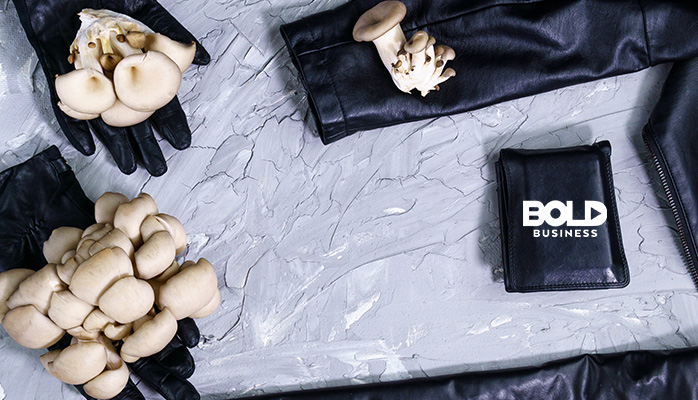
Would You Wear a Jacket Made of Mushrooms?

Industries throughout the world are seeking ways to create products that are more sustainable and environmentally friendly. Many are also trying to reduce their reliance on animal-based products. The food industry is a perfect example of this, with a push toward plant-based products that create “fake” beef and chicken. But the food industry isn’t the only one with these incentives. Surprisingly, the fashion industry is also pursuing such endeavors, particularly when it comes to leather. Known as bio-based fabrics, scientists and startups alike are exploring sustainable leather alternatives. And as it turns out, mycelium leather products are gaining quite a bit of interest.

(Fake meat is a trend that Bold has written extensively about–read up on it here.)

You may have heard of magic mushrooms, but mycelium is different. Mycelium is essentially the structural material that comprises mushrooms, and notably, it can be used to create sustainable leather alternatives. One major company involved in mycelium leather products is MycoWorks, which has received significant funding as of late. Numerous companies in the fashion sector are starting to collaborate with MycoWorks, but they are not alone. Other industries that traditional use leather goods are also exploring these bio-based products as well. Though the price point of mycelium leather products is still on the high side, it is expected to come down over time. And this plus its other features will likely be huge selling points.

“MycoWorks can achieve the same quality and performance as animal leathers without the need for any sort of plastics,” – Matthew Scullin, CEO, MycoWorks

The Leather and Alternative Leather Industry Today

In 2021, the total leather goods market was estimated at $400 billion. By 2030, it is expected to exceed $720 billion. Understanding this, consumer demand for these products remain high, especially when it comes to fashion and footwear. Unfortunately, animal-based leather isn’t environmentally friendly, and it is also not always predictable. These are features that have led companies in search of alternative sustainable leather alternatives. But to date, such alternatives have mainly involved plastics-based options. And it is increasingly evident these are not really sustainable or environmentally friendly.

As a result, mycelium leather products began to appear around a decade ago. MycoWorks formed in 2012 after artist Philip Ross and UC Berkely PhD student Sophia Wang began experimenting with designs. They called their mycelium leather products “Reishi,” which is the Japanese term for the genus of mushrooms. Since that time, they have consistently grown, recently receiving $125,000 in funding this past January. As a result, MycoWorks is constructing a 150,000 square-foot facility in South Carolina where they plan to scale operations. Being able to make six square-foot sheets of Reishi at a time, they expect to make millions of these annually. Based on the growing interest in sustainable leather alternatives, this couldn’t come at a better time.

“I asked one of my [designer hat] seamstresses and she couldn’t tell the difference between Reishi and real leather.” – Nick Fouquet, French-American Hat Designer

The Process of Making Mycelium Leather Products

Naturally, the process involving mycelium leather products requires first producing mycelium. Given the demand over the last several years, MycoWorks now produces its own and maintains its own strains in cold storage. The mycelium is then combined with sawdust waste from sawmills and placed in trays. And as the sawdust decomposes, the mixture forms into thin sheets that they call Reishi. It is at this stage that the sheets can be customized based on clients’ preferences. In some, even other fabric materials like cotton might be added. The final step then involves the tanning process, which is performed typically by outside tanneries.

These mycelium leather products are preferred because they offer sustainable leather alternatives. The process itself has fewer steps in production, which means it has a much lower environmental impact. Likewise, the tanning process does not require chromium, which is known to be harmful to the environment. But more importantly, these specific sustainable leather alternatives can be produced in a highly consistent and predictable manner. This inherently offers some enhanced efficiencies for the producer of mycelium leather products and clients as well. These aspects have notably contributed to its growing appeal.

“The companies working with mycelium are not trying to duplicate what an animal hide does but are creating something that has the softness and resiliency of leather and something that is, fascinatingly, also more controllable.” – Frank Zambrelli, Executive Director of the Responsible Business Coalition at Fordham University in New York

A Growing List of Clients

As noted, the largest user of leather goods is the fashion industry with footwear designers leading the way. Therefore, it’s not surprising that MycoWorks has received requests from some industry players. One of the notable companies that has used mycelium leather products is Hermes. In past months, it has included mycelium leather in its Victoria handbags. Similarly, celebrity hat designer, Nick Fouquet, has also designed fashionwear with these sustainable leather alternatives. And as MycoWorks scales operations, and its prices decrease, many more are likely to make similar requests.

Mushrooms are sustainable leather alternatives and Smurf houses
I suppose, as sustainable leather alternatives go, mushrooms aren’t that bad… right?

While interest in sustainable leather alternatives from fashion companies is expected, other businesses may be more surprising. This is part of a more targeted focus on companies involved in environmental, social and governance criteria. Ligne Roset, a high-end furniture maker, has also been collaborating with MycoWorks and their mycelium leather products. Also, GM Ventures, the investment arm of General Motors, has also been involved in exploring partnerships. GM is quite intrigued by the product and its capacity to create a more sustainable product. But it is equally interested in its ability to generate consistency and predictability in production. It is important to note that the automotive industry is the second largest consumer of leather-based goods.

Bio-Based Leather Competition

When it comes to mycelium leather products, MycoWorks is not alone. There are other companies who are also exploring these sustainable leather alternatives. Bolt Threads is another one who has also attracted notable clients in the fashion industry. These include Stella McCartney, Adidas, and Lululemon. And it is also working with Mercedes in a similar way that MycoWorks is collaborating with GM. In addition, scientists are looking at other bio-based sustainable leather alternatives using pineapple and cactus. These developments offer a great hope for the future, especially if prices of these processes and materials decrease. The innovative solutions these businesses are providing will undoubtedly change the future of the leather industry in very positive ways.


Sometimes businesses are like rose bushes, and need to be pruned to grow. Read more about prune and grow, and Musk’s use of it, in this Bold story.

How can we help?

Bold Business Insights
Privacy Overview

This website uses cookies so that we can provide you with the best user experience possible. Cookie information is stored in your browser and performs functions such as recognising you when you return to our website and helping our team to understand which sections of the website you find most interesting and useful.