



Day: September 27, 2018
Tips for Making a Perfect Business Pitch

Perfecting the business pitch is an entrepreneur’s or business leader’s rite of passage—a measure of expertise and success. This is a hurdle that start-up founders, business owners, CEOs, and other executives must conquer to grow their businesses and ultimately make a difference in their field. If you’re a leader and you’re talking to investors about your business, you need to know what goes into a pitch. Make those precious few minutes count, and leave investors with a long-lasting impression of you and your company’s capabilities.
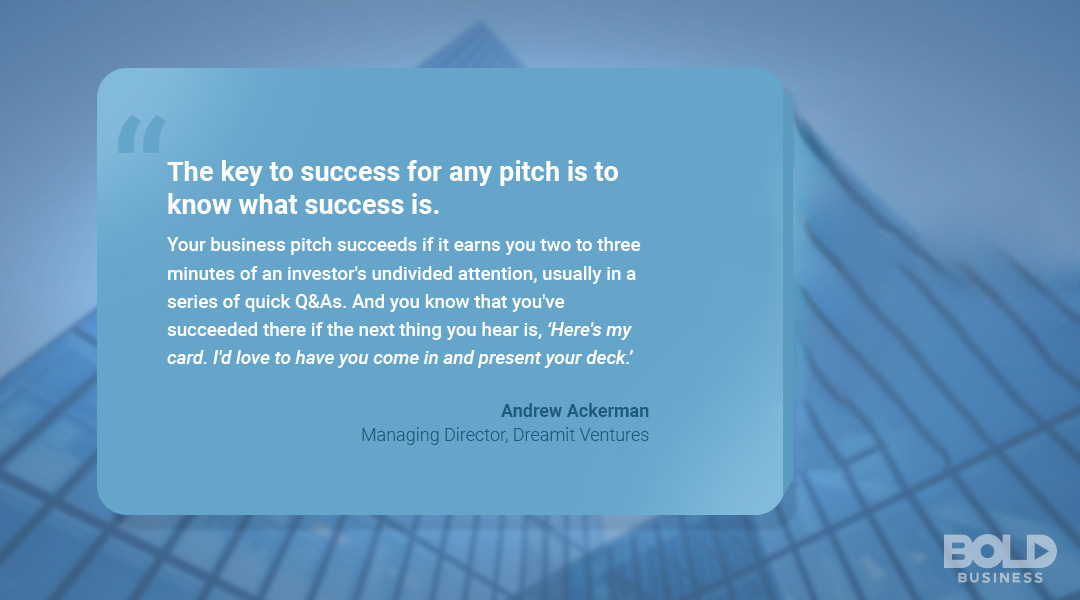
Bold Business provides examples from experienced entrepreneurs both from the Synapse Summit and through our own interviews including Kasra Moshkani, Southeast US GM Uber Technologies, Nate Lehoux, Co-founder ProveIT Games, Chuck Papageorgiou, Co-founder and CEO International Screening Solutions, Steve Tingiris, Founder Dabble Lab, and Andrew Ackerman, Managing Director Urban Tech, Dreamit.
Understanding the Business Pitch
With very limited time, you must have a concise yet memorable spiel. Consider the elevator pitch as a creative narrative that concludes with a specific call to action in order to get someone’s attention, advice, or investment. The prize of a successful pitch is getting the commitment of your audience.
Four Tips to Perfect the Business Pitch
There are many things to consider when drafting your business pitch. The following tips will help you refine your speech, establish your credibility, and craft an impression that will work for you.
-
Have a Crystal Clear Message
With only a few minutes, you can’t afford to be verbose. Maximize your time by volunteering vital and relevant information your audience wants to hear. Stick to facts that reinforce your message and give you expertise and credibility.
Start with a catchy introduction. Share information that not a lot of people are familiar with. Make sure your rhetoric is effective. Use a healthy mix of everyday terms to have a relatable voice, and industry jargon to show your competence.
Be mindful of your verbal crutches—words such as “um”, “like”, “uh”, and “you know”. These words spell uncertainty on your part and suggest that you may not be as competent, knowledgeable, and reliable.
Keep in mind that your verbal language isn’t the only thing your audience notices. Your body language, your attention to detail in your clothing, how you engage through eye contact—these are things that indicate the kind of business leader you are. And consequently, this suggests the kind of business you have.
-
Connect with Investors
Make your audience feel seen and understood by letting them know you understand their business. Do your due diligence in getting a comprehensive picture of those you are talking with, and touch on things that you know will pique their interest. Highlight the solutions, opportunities, and benefits you can provide them, and underscore why they cannot let this pass.
Investors want to hear about growth, market opportunity, execution capability, commercial traction, and how their investment can stand out. These are concerns you can briefly address to let them know that you have thoroughly understood all angles and aspects of the situation.
-
Practice, Practice, Practice
A business pitch is a performance in itself. And like with any other skill, it needs practice to achieve perfection. For every pitch you’re giving, prepare a script that says everything you need to say and practice pitching to yourself and to others. Learn to get feedback and adjust your pitch based on suggestions. Know which words should be highlighted, master the pace of your spiel, and be confident in how you speak and relate to your audience.
Be mindful of the length of your pitch. If a pitch runs longer than the audience is willing to hear it, you immediately lose their interest. This then comes across as amateur, unprofessional, and disrespectful of their time.
-
Forego the Visual Crutch
While helpful, your PowerPoint presentations can actually hurt your chances if you rely too much on the slides. If you can’t deliver the business pitch without a deck, you may not be ready to give your pitch. If you are completely knowledgeable about the things that concern you and your audience, you shouldn’t require any visual aids. These could be distracting for you or for your audience, and your deck may not contribute much to your pitch. An excellent business pitch is simple, has sufficient relevant information, and can stand on its own.
Business pitches can go for as short as a minute or as long as an hour. As long as you follow these fundamental tips in your preparation, you can strive to perfect your pitches. When the opportunity comes for you to pitch your ideas, products, or services, be confident that you are expertly communicating and representing your company to investors that will help make a difference.
The Rising Demand for Content Writers and Video Marketing in Businesses

Over the last few decades, businesses are increasingly turning to professional content writing services to help them market more effectively. However, with all the options available, one might wonder, why is content marketing important? It is significant because it works. When compared to paid search ads and traditional promotions, quality content generates three times as many leads. Also, when compared to other efforts, content marketing has a conversion rate that is six times greater. When you consider that writing quality content is also 60 percent less expensive, you will appreciate why content marketing is so important. However, what you may not realize is why it’s so effective and why its rising demand will likely continue.

Content Marketing is About Customer Experience
The days of product promotions and sales ads are not what they used to be. Consumers now see an average of 5,000 ads per day. This figure more than doubled in the last three decades. What customers want today is authenticity, transparency, and a relationship with a business and their products. This is where effective content writing comes into play. Part of the rising demand in content marketing is a need for user-experience writing or UX writing. UX writing provides much more than traditional content and information. Based on design marketing concepts, UX writing creates customer personas for better interactions. It also seeks to identify which customer problems are being solved by the product while communicating brand character. Persuasive, conversational content is much more effective in connecting and motivating consumers. This is a major reason why content marketing is important and in demand.
New Areas Requiring Content Marketing Services
Better content for reaching customers and connecting with them extends beyond product descriptions and company profiles. The use of artificial intelligence for automated “bots” is another reason why content marketing is in high demand. When it comes to content, more conversational and authentic communications drive better customer retention and satisfaction. Thus, businesses are seeking quality content writing professionals to provide such language for their bots. Certainly, design “techies” are needed to create these AI bots.
However, so are content marketing writers who can create conversations and anticipate customer situations and responses. Interestingly, some of the best conversational content services come from individuals with acting backgrounds. The rise in automated consumer services also explains why content marketing is vital for businesses today.
Just-in-Time Expectations – For Customers and Employees
Time is one of the most precious commodities for customers today, and so is information. Likewise, everyone has come to expect access to information when he or she wants it. These trends have led to two major developments when it comes to content marketing…microlearning and video nuggets. Microlearning reflects the brevity with which we learn today. Information is best provided in snippets for rapid-fire learning. Millennials are very adept at this, but even Baby Boomers have come on board as well. Secondly, video nuggets offer similar benefits. Video provides rich content that can communicate brand and product value quickly. Also, combining microlearning and video nuggets can be great solutions for employee training and development. As you can imagine, businesses need professional content marketing and writing skills for these scripts. These trends are only going to advance in the future, especially in video learning areas.
Hiring Quality Content Marketing Professionals
Given the demand for content marketing skills, businesses are seeking professionals who can deliver the content they need. Some companies may choose to hire these services in-house while others will contract professionals outside the company. Whether it’s a freelancer or business services you are looking to hire, some best practices should be considered. This can help avoid many of the common mishaps that some businesses experience when seeking quality content marketing. The following are some key questions you should ask when hiring a content marketing professional or business:
- Does the published portfolio fit your business area?
- Are the content samples provided relevant to today’s marketing environment?
- Does the content reflect your company’s brand, style and values?
- Does the professional or business have an active social media presence?
- Is the professional or business seasoned with adequate experience?
- Are their verbal and in-person social skills engaging and pleasant?
Don’t Get Behind the Curve
From conversational AI bots to scripted video nuggets, writers and businesses proficient in content marketing are increasing in demand. Businesses that effectively seeks out these professionals will be the ones to engage better, motivate and retain customers over time. At the same time, businesses can better engage, develop and retain their own employees through similar internal content marketing efforts. Cravings for information and learning appear insatiable, and for businesses, this means content marketing is a key area where investments need to be made.
