
Bold Business Logo

Uncharted Territory After Roe v. Wade – How Far Do HIPAA Privacy Protections Go?

In the wake of the US Supreme Court overturning Roe v. Wade, some upheaval and change were to be expected. Several states advanced antiabortion laws as was anticipated. Legal cases are being filed left and right in various states as the abortion issue continues to be debated. But amidst it all, some lesser expected dilemmas have emerged as well. One of the most problematic it seems, at least when it comes to healthcare providers, involves patient privacy. For years, the Health Information Portability and Accountability Act (HIPAA) has served as the guide for protecting patient health information. But what is much less clear is just how far HIPAA protection for abortion information extends.

The HIPAA privacy rule has been in effect since 1996. In essence, it prevents healthcare providers from sharing patient health information to parties without patient permission. While this may seem rather straightforward, the abortion issue has created some challenges. For states that now consider abortion a crime, does the HIPAA privacy rule still apply? If HIPAA protection for abortion information exists, are there exceptions? Providers face such dilemmas in the wake of the Supreme Court’s decision in addition to others related to emerging technologies. Without question, patient privacy rights are important. But exactly how far state laws and technological freedoms extend in relation to these rights remains poorly defined.

“We are in such uncharted territory when it comes to this type of [privacy] issue that providers really don’t have guidance.” – Samantha Deans, Associate Medical Director for Planned Parenthood of South, East, and North Florida

The Basics of the HIPAA Privacy Rule

The HIPAA privacy rule, despite its longevity, remains the standard for protecting patient health information. Though complex in its language, the rule effectively defines who can access a patient’s health information and in which contexts. As a general rule, patients must authorize sharing this information either through direct or indirect means of consent. When requests for patient records are made, these almost always involve a written request for documentation purposes. And likewise, HIPAA requires that patients be aware of which entities receive this information. As is evident, the HIPAA privacy rule does its best to protect patients’ privacy rights. But of course, these data protection laws did not anticipate today’s rather complex legal and technological landscape.

(Surveillance capitalism is a thing, and it’s a thing you should be wary of. Don’t worry, Bold has you covered.)

Notably, state anti-abortion laws challenge standard HIPAA practices. From one perspective, HIPAA protection for abortion information seems like it should be applied as it would to any health data. But there are exceptions when HIPAA protections might be waved. For example, if a provider receives a court order or subpoena for specific health information, they are allowed to comply. They may also choose to provide such health information if they believe a crime has been committed. Given that some states view abortion as a crime and may seek court orders, these exceptions offer HIPAA loopholes. And since HIPAA also allows information-sharing for public health reasons, state health agencies could similarly request and receive such information. These are where HIPAA protection for abortion information may fail in its ability to preserve patient privacy.

“Typically the laws are trying to catch up with where the real world is, in terms of what’s going on. This time we have the inverse of that situation, where the real world is trying to catch up or adjust or modify to the law.”  – Bruce Armon, Health Law Attorney at Saul Ewing Arnstein & Lehr

Other Loopholes in the HIPAA Privacy Rule

Interestingly, law enforcement in some anti-abortion states is finding other creative ways to get around the HIPAA privacy rule. Some have asked for help from any healthcare professional with knowledge of abortion-related crimes. Under HIPAA, providers cannot provide such information unless a patient authorizes it. But in states where there are whistleblower protections, HIPAA protection for abortion information may fail. Should a provider wish to share such information in states with anti-abortion laws, whistleblower statutes offer safe havens. This is yet another way HIPAA legislation falls short of protecting patient privacy.

someone facing some serious cybersecurity
The HIPAA Privacy Rule will inevitably clash with the reporting component of certain anti-abortion laws.

Other loopholes in HIPAA protection for abortion information involve the use of everyday technologies. Many healthcare apps now exist that are beyond the scope of the HIPAA privacy rule. Some femtech apps, like those that track menstrual cycles, can be readily accessed by law enforcement if subpoenaed or seized. This information can then provide supportive evidence that an abortion may have taken place. Naturally, this is highly private health information that deserves protecting. But because healthcare technologies have advanced faster than laws, such protections do not exist. HIPAA protections certainly do not extend this far based on current legislation.

“To comply with HIPAA you have to comply with the bare minimum. Provide what’s asked and not more, otherwise you’ve got a HIPAA problem.” – Dianne Bourque, Health Law Attorney at Mintz, Levin, Cohn, Ferris, Glovsky, and Popeo, P.C

What’s a Healthcare Provider to Do?

Currently, the best thing healthcare providers can do is to understand what is required of them. Under the HIPAA privacy rule, healthcare professionals must provide what a court order or subpoena demands. However, providers must only offer precisely what is requested and nothing more. Likewise, providers may wish to collect less information about reproductive health unless it is necessary. What isn’t collected and documented is naturally not subject to any discovery. Outside of these guidelines, providers must otherwise abide by HIPAA protections for abortion and other health-related information. For now, these are the basic tenets of HIPAA that determine what information can and cannot be shared.

In looking ahead, clearly the bigger issue involves the need for more comprehensive privacy legislation at a national level. This not only includes laws that protect health information privacy rights from emerging technologies. It involves even broader protections giving the frequency with which cybersecurity threats and violations are occurring. While the Department of Health and Human Services may tweak the current HIPAA privacy rule, it can only go so far. In order to truly provide greater privacy protections, Congressional actions would be required. Regardless of which side of the abortion debate one sits, it is universally important that greater privacy rights protections are needed. The loopholes in HIPAA protections for abortion information highlights this fact. But the same issues exist in many other areas as well, proving that much broader actions are essential.


Want to control your cost efficiency and protect your bottom line? Bold Business can help.
Social Media Is Changing–Is It for Better or Worse?

It’s hard to fathom that prior to 2004, social media didn’t exist as we know it today. Facebook had yet to make its launch, and Twitter wasn’t even a term. But that changed pretty rapidly as the world soon felt the effects of social media in a major way. Today’s it’s hard to find anyone who doesn’t connect to social media in some way or another. And along with that, social media pros and cons have emerged. But just as quickly as social media appeared, it also seems to again be morphing into something different. And whether that something is good or bad has yet to be determined.

It’s no secret that Facebook and Twitter remain the dominant players when it comes to social media today. With both having over 100 million users, it’s easy to appreciate that the barriers to entry are formidable. But some of the newest players have found ways around these barriers and are disrupting the social media landscape. The effects of social media changes in this regard have significant repercussions for all of us. In other words, these changes could usher in social media pros and cons alike. Understanding this, it’s worth taking a deeper dive into these recent developments to explore social media’s immediate future.

“Now we’re moving toward social media not led by connecting with friends and family, but by algorithmic code. We only post once a year, with massive life updates, because our feed is no longer meant to remember a fun night out; it’s meant to entertain us.” – Christianna Silva, Digital and Tech Culture Journalist, Mashable

What’s Changed with Social Media

In a world dominated by tech companies like Google/Alphabet, Microsoft, and Apple, persistence seems inevitable. These companies have monopolized their industries in various ways, making it difficult to overcome their stature. As such, many presumed Facebook and Twitter enjoyed the same types of privileges. In many ways, they absolutely have as the effects of social media are incredibly broad. Both enjoy massive audiences, and both have tremendous valuations. Recently, Facebook was determined to have a market cap of $562 billion. Twitter, thanks to Elon Musk’s valuation, is somewhere around $44 billion. Regardless of social media pros and cons, it seemed safe to assume these giants would be market leaders indefinitely.

(Brush up on the Elon Musk/Twitter almost-marriage with this Bold story!)

Interestingly, however, the social media landscape has changed a lot recently. In a recent survey looking at teen social media use between 2014 and today, major shifts have occurred. The percentage of teens using Facebook have fallen from 71% to 32%. Similarly, only 23% use Twitter today compared to 33% eight years prior. At the same time, TikTok use has boomed to 67%, and Instagram and Snapchat have also made gains. The effects of social media audience preferences have been critical in driving these changes. And while social media pros and cons persist, where users are tapping into social media is evolving.

“That’s the business model of social: to have an algorithm in the beginning that is rewarding to all, and then once you have all the users and you’ve gotten people addicted to using the app on an ongoing basis, the model changes.” – Sabrina R. Merritt, Founder and CEO of October Social Media

Algorithms Persist, But Social May Not

The underlying event that seems to be triggering changes in social media use involve user preferences. As its name implies, social media enjoyed its rise as a result of the social networks it created. Friends and family members could connect, share, communicate, and relate in ways that were easier and more creative. Understanding this, developing this social graph took time for social media companies like Facebook and Twitter. This is exactly why competing with these giants was so difficult once they acquired millions of users. The effects of social media audience size were enormous when social networks were essential. But this requirement may no longer be necessary, at least based on user preferences and behaviors.

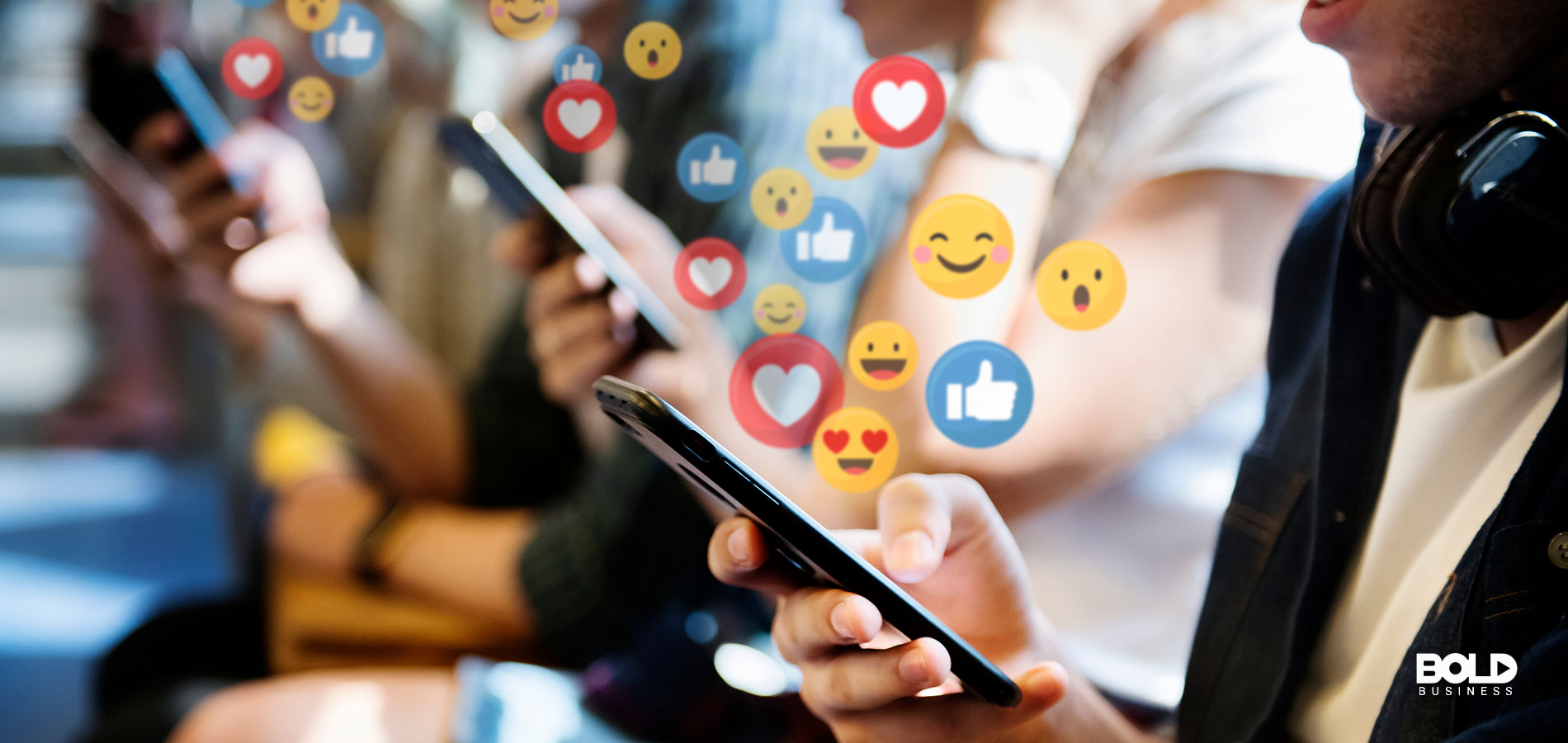
someone rocking social media on their phone
The effects of social media can be either positive or negative–what does that bode for its evolution?

Social media pros and cons do exist, and one of the pros has always been the social opportunities provided. But that changed when TikTok appeared on the scene. Suddenly, entertaining creative content attracted social media users instead of social networks. Algorithms no longer focused on potential friends with whom you might connect. Instead, they determined the type of short-segment videos you might enjoy. And they did so with amazing accuracy. Without the requirement to build massive social graphs, TikTok and others suddenly gained a foot in the door. In fact, TikTok now enjoys over a billion users a month. The effects on social media that these algorithm shifts caused cannot be understated. Instead of being an algorithm focused on social, the most powerful ones today are those that focus on entertainment.

“If you are not paying for it, you are the product. And eventually we all become aware of being turned into donkeys, and it makes us self-conscious, and we clam up until the next one.” – Aimée Morrison, Associate Professor, University of Waterloo

Future Social Media Pros and Cons

So what does all of this mean for the social media of tomorrow? What social media pros and cons can we expect? On the pro side, one of the major benefits may be an end of social media dominance by Facebook and Twitter. Without requirements of building social infrastructures to thrive, new social media sites can enter the field. We are already seeing this happen as one of the effects of social media shifts. Not only are new social media companies like BeReal appearing, but existing social media giants are shifting their focus. Facebook added Reels to compete with TikTok and changed its algorithms to be more entertainment-focused. This could be a very good thing as we look toward a much more competitive and creative social media future.

Of course, there will undoubtedly be some downsides as well. The negative effects of social media in creating ADD-like attention spans will only get worse with brief snippets of entertainment. The number and volume of distractions will continue to expand as well as the competition in the attention economy increase. In this regard, it will be up to us to determine which social media pros and cons we are willing to tolerate. Thus, the same pitfalls and pressures will remain even if the names of the dominant social media players evolve. Will a shift of social media from social to entertainment be in our best interest? That depends. At our core, we are social beings and need to feel connected. Social media rapidly grew by tapping into these core needs. It’s unlikely short-segment videos and entertaining snippets will satisfy these cravings. But where there’s a need, there’s likely to be a creative and innovative solution around the corner. This time, that solution may not be Facebook or Twitter but hopefully something even better. For now, they jury is out and only time will tell.


Want to control your cost efficiency and protect your bottom line? Bold Business can help.

The Smart Glasses That Provide Captions for the Deaf

For more than a decade, there has been a great deal of hype concerning augmented reality. As early as 2011, Google introduced its AR project working on Google Glasses eyewear. Not long after, several other companies started similar projects. And of course, today we have Facebook changing its name to Meta and moving toward a metaverse. But while most AR projects tend to focus on gaming and entertainment, few have true utilities that make the world a better place. Interestingly, that no longer appears to be the case. With the introduction of smart caption glasses, those who are hearing impaired have new opportunities.

(Bold has written extensively about the Metaverse–brush up on the topic here.)

Recently, two augmented reality companies got together to create something really profound and benevolent. They developed the first smart glasses for deaf individuals that allows them to read conversations that they otherwise cannot hear. Labeled smart caption glasses, a wearer can “see” conversations around them even if they aren’t looking at the speaker. Leveraging AR technologies to create this breakthrough, these innovators are ushering in new possibilities for the future. In terms of basic AR glasses overall, they are among many companies invested in these new pursuits. But when it comes to smart glasses for deaf individuals and for more practical uses, they are in the forefront.

“We are so proud of the ability of this innovative technology to enrich the lives of people who are deaf and have hearing loss, so that they can maximize potential.” – Dan Scarfe, XRAI Glass CEO

How Smart Caption Glasses Came to Be

Like many companies today, Nreal has been intrigued and invested in creating augmented reality hardware. Based in the United Kingdom, Nreal developed a sleek and stylish version of AR glasses that they call Nreal Air glasses. Retailing for around £400, these glasses provide wearers HD-quality AR imagery for gaming and entertainment. And they also come equipped with 2 open-air speakers and noise/echo cancelation technology. While this is pretty cool and all, their real adventure began when they partnered with XRAI Glass. It was then they decided to create smart glasses for deaf individuals by leveraging the advances they had already made.

While Nreal provides the hardware for their smart caption glasses, XRAI Glass provides the captioning software. The AR glasses themselves look almost like a pair of Ray-Ban Wayfarers with a little more “beef” added. Immediately behind the outside lens is a second pair of AR lens that provides the visual enhancements. And as part of these enhancements, wearers get to see a portion of their screen filled with closed captioning text. These captions are automatically generated from ambient conversations in the room, providing a visual transcription. Plus, with the aid of voice recognition software components, the text is even assigned to a particular speaker. When it comes to practical innovations, these smart glasses for deaf individuals are a real game-changer.

“This is a great example of the positive difference innovative technology can make for people who are deaf or have hearing loss.” – Mark Atkinson, CEO at the Royal National Institute for Deaf People (RNID)

A Vast Potential for Smart Caption Glasses

The clear benefit for smart glass for deaf individuals is the ability to more actively engage and participate in conversations. It opens doors for them in conversing with those who do not know sign language. It also enhances their ability to read lips. But at the same time, it allows them to be able to do things many of us take for granted. For example, rather than watching someone’s hand signs and lips, they might be attending to other things. This could be preparing a meal in the kitchen, putting away laundry, or even jogging alongside outdoors. And the smart caption glasses have other benefits beyond reading others’ speech. They can also provide text for smart assistants like Siri and Alexa. Here too, those with impaired hearing can engage with these digital assistants without having to watch a stationary screen.

Someone rocking their super smart glasses
Smart caption glasses are the latest innovation that can help the deaf.

While smart glasses for deaf individuals paves the wave to great opportunities, these aren’t the only ones. There are some other additions to these devices that Nreal and XRAI Glass are pursuing in the near future. For example, future versions of these smart caption glasses may provide language translations. Imagine traveling to another country and not having to struggle with a foreign language. They are even trying to identify different pitches, accents, and tones of voice to enhance these types of features. In essence, each of these advances have to potential to greatly enhance human communications in many ways. And with greater communication comes greater creativity and innovation.

“The magic {of AR glasses] will really come alive when you can use them in the real world without the technology getting in the way.” Sundar Pichai, Alphabet CEO

The First of Many Smart Caption Glasses to Come

As you might have guessed, Nreal and XRAI Glass are not alone when it comes to smart caption glasses. Many companies are involved in this pursuit, and some are big name players. Google has recently announced that it is again trying to test public use of AR glasses. Its prior attempts years ago resulted in issues related to distractions as well as privacy. But the company hopes this time around, things will be better. Other major companies working on AR glasses include Facebook/Meta, Apple, Microsoft and Snap. Other less known competitors also include Bose, Magic Leap, and Intel. There’s little doubt that Nreal’s smart glasses for deaf individuals definitely won’t be the only ones available in the near future.

When it comes to such competition, the end result will be good in many ways. Innovations will be more likely to occur in relation to these technologies. Likewise, the affordability of these smart caption glasses will be much improved. But it also remains important to ensure that these advanced technologies are used for more than simply gaming and entertainment. They need to meet individual and societal needs that lead to positive change. Smart glasses for deaf individuals is a perfect example of this and one that can serve as a guide for future pursuits. In this regard, AR companies must maintain a long-term vision rather than one that seeks profits in the immediate future. For any new technology, this is where the real advantages and opportunities lie. And those associated with AR glasses are likely to be no different.


Want to control your cost efficiency and protect your bottom line? Bold Business can help.

How can we help?

Bold Business Insights
Privacy Overview

This website uses cookies so that we can provide you with the best user experience possible. Cookie information is stored in your browser and performs functions such as recognising you when you return to our website and helping our team to understand which sections of the website you find most interesting and useful.