
Bold Business Logo

The Living-Housing Equations in 2021 – Considering Workplaces in a Post-COVID World

Repeated surveys have shown that individuals working remotely from home are not unhappy with the situation. The majority have enjoyed making the adjustment, avoiding the commute, and have greater flexibility. Likewise, most have become progressively more adept at using online tools for collaborating, learning, and socializing. It’s therefore little wonder that the future of office spaces is in question. Many companies are trying to envision what workplaces after COVID will look like. And while the precise picture remains obscure, everyone is certain it will be quite different.

For employers, there are a number of unknowns regarding the future of office spaces as we move into 2021. Will employees remain content working from home or will they prefer to return to an office setting? Which office activities will require an on-site presence? Some suggest that people will want to move back outside their homes after the pandemic simply because they are social creatures. But this may not necessarily mean returning to the way things were. All of these factors make it challenging to predict what workplaces after COVID will look like.

“We’re in the midst of companies reconsidering how their employees are working, and that will take time. There’s a subset of workers now who believe that they can work from home and continue their productivity. You’re not getting all of them back.” – Doug Wulf, Executive Managing Director, Cushman & Wakefield

A Forced Reassessment of Workplaces

The pandemic has certainly made it more obvious that workplaces after COVID won’t likely be the same. With most people working from home at least part of the time, many assume this has been a recent revelation. But that’s not actually the case. Several companies were already reassessing the future of office spaces including many major technology firms. Google, Apple, and Amazon had begun decentralizing their workplaces. Stripe had actually established a virtual remote work hub in order to attract better IT and engineering talent. Even prior to COVID, some changes regarding officer spaces were occurring.

With the pandemic, however, everyone was forced to reconsider the future of office spaces. Suddenly, many businesses realized they could reduce their costs, particularly in real estate holdings. Likewise, studies began showing there was little if any loss of productivity from employers working from home. And surveys showed employers preferred this arrangement, no longer having to waste commute times. In essence, the pandemic served as a major catalyst to change in many ways. And this certainly has involved how businesses are considering workplaces after COVID.

“I think the work from home trend is happening but I don’t think that’s a long-term trend that is a viable solution. People want third spaces to work.” – Brian Burch, Managing Partner, Burch Partners

Will Coworking Spaces Make a Comeback?

With the onset of the pandemic, nearly all coworking spaces took a big hit. Faced with lockdowns, social distancing, and widespread COVID concerns, many aborted these workplaces. This along with major catastrophes in the industry like the fall of WeWork suggested the sector might be doomed. But experts think this will likely be the future of office spaces. In fact, they suggest that all office spaces will be flexible by 2030 and that coworking spaces will fill a large void. These will likely be among the preferred workspaces after COVID.

A bunch of people working in a big open space
The future of office spaces will be reshaped by COVID constraints and the workforce’s appetite for safety.

The writing is already on the wall in this regard. Many businesses are exploring shared workspaces after COVID besides those traditionally considered coworking locales. For example, Starbucks and Citizen M are beginning to offer bookable workspaces by the hour. Residential places like Avalon Bay Communities and Equity Residential are adding meeting spaces and offices to their footprints. In essence, these types of businesses as well as coworking spaces will likely reflect the immediate future of office spaces.

“In 2021, if a lot of people can get the vaccine and get people back to work, then I think things will change. But right now, most people are seeing coworking not coming back fully until 2022.” – David Wiener, Senior Vice President, Colliers International

The Coming Year Will Be a Transitional One

In looking ahead to the future of office spaces, some current trends are noteworthy. For one, business leases are already increasing in activity from 29 percent to 51 percent. This has occurred for two reasons. First, the pandemic has encouraged more businesses to lease office space rather than purchase. Second, leases are being made for shorter periods of time due to the uncertainty. This suggests 2021 will be a transitional year as businesses try to determine what the workspaces after COVID will be.

Part of this determination will go beyond whether or not remote work or coworking spaces will be the larger trend. More importantly. Businesses will need to figure out what amenities will be needed in the future of office spaces. For example, workplaces after COVID will still need common areas for some activities. This includes things like focused work, brainstorming sessions, training seminars, and broad presentations. But with the advances in collaborative and videoconferencing tools, even these may not be a necessity. Thus, businesses are waiting to see how things evolve before committing further.

The Future of Office Spaces

In recent surveys, workers report that 40 percent of workplaces fail to provide creative environments. Likewise, many enjoy the conveniences of working at home, including the lack of an extensive commute. However, the home is not ideal for all work activities. Thus, the future of office spaces likely involves hybrid models. This means workplaces after COVID will probably be closer to home and utilized part-time. Coworking spaces, satellite offices, and rentable areas may well be the norm as a result. While the exact formula isn’t yet known, one thing is certain. Workplaces after COVID won’t be the same as before. Businesses that figure out what works best for them will undoubtedly be those with a clear competitive advantage.


Want to make 2021 a better year than 2020? Then check out PROJECT BOLD LIFE: The Proven Formula to Take on Challenges and Achieve Happiness and Success.


Monoclonal Antibodies: The Newest Wonder Drug?

A great deal of publicity has centered on monoclonal antibody use for those suffering from COVID-19. Weeks after the U.S. president received this therapy, the FDA approved its use for emergency purposes in select individuals. For many, this may have been the first time they had heard of monoclonal antibody therapies at all. But believe it or not, these treatments have been rapidly increasing in popularity for at least a decade. In fact, it’s hard to tune into any media today without seeing advertisements for drugs that end in “-mab.” This suffix is the telltale sign the medication belongs to the larger group of monoclonal antibody treatments.

Today, monoclonal antibody use extends well beyond the management of COVID-19. These drugs are commonly employed in a variety of cancer therapies. Likewise, monoclonal antibody therapies are routinely administered in some immune disorders. But now, these protein-based infusions may hold promise for a much more elusive disorder…Alzheimer’s disease. If subsequent trials support what preliminary results suggest, monoclonal antibody treatments may well be a wonder drug. For a disorder that has no highly effective therapies, this would indeed be a huge breakthrough.

“Monoclonal antibodies, like small molecules, are tools for a specific job. They are an incredibly flexible platform and very good at what they do. It is hard to imagine anything that has the same advantages.” – Janice Reichert, PhD, Executive Director of The Antibody Society

A Little History of Monoclonal Antibody Therapies

Though its start was pretty rough, some scientists began researching immune proteins as potential treatments a century ago. In the late 19th century, efforts to infuse blood containing suspected antibodies for specific conditions existed. But the results were miserable. The technologies and insights were simply not present at the time. But by the mid-1980s, things had changed with immune therapy pioneers emerging. The FDA approved the first monoclonal antibody therapies for those suffering from transplant rejection. Monoclonal antibody use then escalated further with the development of gene-editing techniques. As of 2020, there are now roughly 100 monoclonal antibody treatments approved by the FDA for cancer and non-cancer conditions.

A medical professional about to administer a monoclonal antibody shot
Monoclonal antibody use extends beyond just the treatment of COVID-19.

Monoclonal antibodies are essentially very specific proteins that target specific antigens in the body. Depending on what researchers want a drug to do, they design a monoclonal antibody for that intended purpose. Sometimes, monoclonal antibody therapies attach to a specific protein antigen in the body to boost an immune response against it. Other times, they are designed to block specific activities when they attach to an antigen. And others actually carry additional drugs to a specific site to exert a specific effect. Though monoclonal antibody use has been primarily for cancers in the past, this is changing quickly. Today, a host of non-cancer conditions are being managed with monoclonal antibody treatments.

“The greatest challenge now is to understand the biology, not to generate the antibodies. The whole biology of ligands, receptors, redundancies, antagonists, and so on is much more complicated than it appears.” – Andreas Plückthun, PhD, Professor of Biochemistry, University of Zurich.

The Potential for Monoclonal Antibody Use in Alzheimer’s

Recent reports suggest that monoclonal antibody therapies may play a role in Alzheimer’s dementia as well. Researchers at Eli Lilly are currently conducting clinical trials for a drug named donanemab. In essence, this monoclonal antibody is designed to target amyloid plaque proteins in the brain. In Alzheimer’s patients, these are believed to interfere with brain functioning, leading to progressive declines. Thus, if monoclonal antibody use could eliminate these plaques by augmenting an immune response against them, patients would improve. Based on early results, researchers suggest donanemab removes amyloid plaques and slows decline by roughly a third compared to placebo.

These results are far from definitive at this point, and additional research is being planned. However, monoclonal antibody use in this manner demonstrated how targeted and precision medicine in Alzheimer’s is advancing. In this instance, monoclonal antibody therapies allow the immune system to better attack these destructive amyloid plaques. Assumedly, this could lead to better cognitive function and slower decline. Also, no significant side effects were reported among patients during the four weeks of infusion. These are indeed potentially exciting results that could completely change the management of dementia.

“Monoclonal antibody products are a godsend to those patients who are eligible and are seen by us early in the course of illness. The earlier, the better.” –  Michael Saag, MD, Infectious Disease, University of Alabama at Birmingham

Challenges with Monoclonal Antibody Use in COVID

As you might imagine, COVID has been a catalyst for healthcare advances. In terms of monoclonal antibody therapies in COVID, the mechanism of action is different from other monoclonal antibody treatments. Two drugs, used in combination, have been approved by the FDA in select patients. For those over 65 years of age or who have chronic disease, they may qualify. They are required to have a positive COVID test, not be hospitalized, and not require oxygen. Ideally, they should also be within 3 days of symptoms or a positive test. In this population, monoclonal antibody use significantly reduces the chance of hospitalization or emergency room care.

The two drugs are called casirivimab and imdevimab, and these are provided by an intravenous infusion. These monoclonal antibodies therapies work by attaching themselves to the spike protein on the coronavirus molecule. But rather than stimulating an immune attack at that point, they essentially prevent the virus from attaching to human cells. Regeneron Pharmaceuticals and Eli Lilly manufacture these substances, but unfortunately, they are being underutilized. Too few providers as well as patients appreciate the impact these wonder drugs might offer.

Much More to Come for Monoclonal Antibody Therapies

According to many researchers, we are just beginning to scratch the surface when it comes to monoclonal antibody use. Much more must be learned about how our immune system functions before we can really tap into their potential. However, it’s clear already that this approach to treatment holds tremendous promise. From COVID, to cancer, to Alzheimer’s, monoclonal antibody therapies will play a major role in ongoing care.


Want to make 2021 a better year than 2020? Then check out PROJECT BOLD LIFE: The Proven Formula to Take on Challenges and Achieve Happiness and Success.
Short-Form and Vertical Videos – Digital Marketing Musts for Your Business’ Future

For many years now, video content has been at the forefront of most digital marketing trends. In fact, over 1.3 million videos are uploaded on various platforms every day. Think about that number for a minute. That is a staggering figure. But what’s even more impressive is where the majority of these videos are being posted. Most now involve social media platforms rather than websites and platforms like YouTube. That includes Facebook, Instagram, Snapchat, and of course, TikTok. Understanding that’s where consumers are, it’s no surprise digital marketing trends are encouraging a greater video presence.

A large push encouraging these digital marketing trends has naturally been the pandemic. With millions working from home and dealing with virtual platforms, increased consumption of video content was inevitable. At the same time, mobility trends are also driving change. Those on mobile devices prefer short-form and vertical videos. Short-form implies brevity, often a few minutes or less in duration. Vertical videos are those designed to be seen in portrait orientations, which are ideal for mobile devices. Not only do the majority of consumers prefer video content, they are increasingly migrating to these formats.

“The consumption of online video is growing rapidly, and the average person will spend half as much time viewing online video as they spend viewing conventional television this year.” -Jonathan Barnard, Head of Forecasting at Zenith

Digital Marketing Trends in Video Editing

As you might appreciate, posting a long-form video on a social media or mobile platform isn’t likely to attract viewership. These are ideal for websites and other video platforms like Vimeo or YouTube. Plus, they offer the ability to provide SEO content marketing in related articles. But short-form and vertical videos are needed for briefly accessed mobile sites. And businesses don’t want to reinvent the wheel or start from scratch when developing this aspect of their digital marketing. The answer? Taking long-form videos and editing them into short-form and vertical videos and fragments.

Though not readily available today, marketing experts see third-party applications and services soon meeting this rising demand. In the meantime, businesses will want to partner with the right digital marketing professionals to achieve this task. That means seeking out those with the right tools, processes and talent to create short-form and vertical videos from long-form ones. Likewise, since major social media and brief-video platforms use similar advertising models, a single strategy can be devised for all. Companies that do this well and efficiently will be able to exploit these evolving digital marketing trends.

“Video AI is currently being developed from what is essentially a creation point of view, identifying which parts of videos users resonate with, chopping and changing them, then re-serving them as an optimized form of content, which I think is quite interesting.” –  Macy Edwards, Director of Digital Paid Media, Clickthrough Marketing

Digital Marketing Trends in Live Videos

When it comes to short-form and vertical videos, live videos are the most underutilized marketing tool. Survey after survey reveals that live video content is by far the most engaging and enjoys the greatest organic reach. Yet, it is also the least-used type of marketing content that businesses pursue. This has been clearly evident since Facebook Live was introduced in 2015. However, with everyone becoming more comfortable with live virtual platforms through videoconferencing, thing is rapidly changing. Most people have become quite comfortable with content creation apps. Thus, greater acceptance of live short-form and vertical videos has emerged among both companies and consumers.

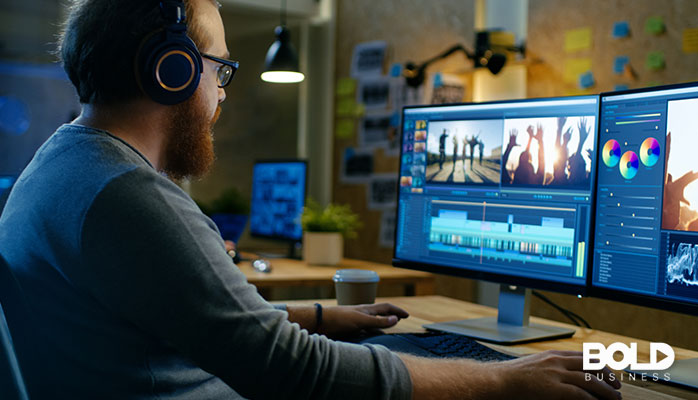
A dude with headphones on editing a video
Stay on the edge of digital marketing trends by investing in capturing the video-centric audience.

With these digital marketing trends are noteworthy alone, live video marketing is now expanding into retail marketing. Real-time shopping videos are common on Facebook and Instagram. This is especially true as Instagram Reels extended posts to 30 seconds. Likewise, younger consumers are seeking TikTok and Snapchat videos containing similar content. Short-form and vertical videos that are informative, educational, and entertaining gain the most traction. For any retailer, this could be huge when it comes to attracting customers.

“…It could easily be argued that video is in fact the most powerful. Why? Simple! It’s all-encompassing. It allows viewers to see, hear and feel the content on a far deeper emotional level.” – Martin O’Toole, Freelance Brand Strategist

Storytelling with Short-form and Vertical Videos

All types of video content offer the potential to connect with consumers at a deeper level. If pictures are a thousand words, then videos must be in the millions. But it can be challenging to accomplish this in a sustained way when it comes to short-form and vertical videos. Brevity is sometimes not in your favor, and companies naturally want customers to return. As noted, educational and entertaining video content is one way to create brand followership. But another great way involves story-telling. Many marketing gurus suspect story-telling will be among the top digital marketing trends to come.

Want to learn more about Bold Business’ digital marketing services? Click here!

The anticipated strategy to achieve this using short-form and vertical videos involves proper video sequencing. Think about a television program interrupted by commercials. Each segment of the program leads to the next, which keeps the viewer engaged. In a similar way, short-form and vertical videos would do the same thing. But instead of commercials, the intervening activity would be whatever consumers chose to do before coming back to your site. Digital marketing trends suspect some type of cliffhanger or ongoing story will keep customers attentive. And by doing this in an informative, authentic and entertaining way, companies can gain greater followings.

A Changing Algorithm Landscape in Digital Marketing

Without question, SEO content will continue to be relevant and drive customers to your platforms. However, short-form and vertical videos don’t permit SEO to provide a ranking algorithm like other content formats. Instead, Facebook, Instagram, TikTok and others utilize alternative data for ranking. This may include visitors’ reactions, comments, or number of shares. It may also involve user interests, posting dates, and prior video interactions. These will evolve in the coming years, and it will be important to keep up with these digital marketing trends. But either way, short-form and vertical videos are here and a must for today’s modern business.


Want to make 2021 a better year than 2020? Then check out PROJECT BOLD LIFE: The Proven Formula to Take on Challenges and Achieve Happiness and Success.
How can we help?

Bold Business Insights
Privacy Overview

This website uses cookies so that we can provide you with the best user experience possible. Cookie information is stored in your browser and performs functions such as recognising you when you return to our website and helping our team to understand which sections of the website you find most interesting and useful.