Bold Business Logo

Los Angeles Uses ‘Smart Boot’ Technology To Collect Unpaid Parking Fines and Fees

The city of Los Angeles hopes to collect more than $21 million in fines and fees for illegal parking and other traffic violations. The city hopes to accomplish this with the help of a new ‘Smart Boot’ car locking technology. The city originally stopped using car boots back in 2009, replacing them with traditional car towing services.

With the use of a tool that scans license plates, law enforcers can search through a database for vehicles with five or more outstanding tickets.

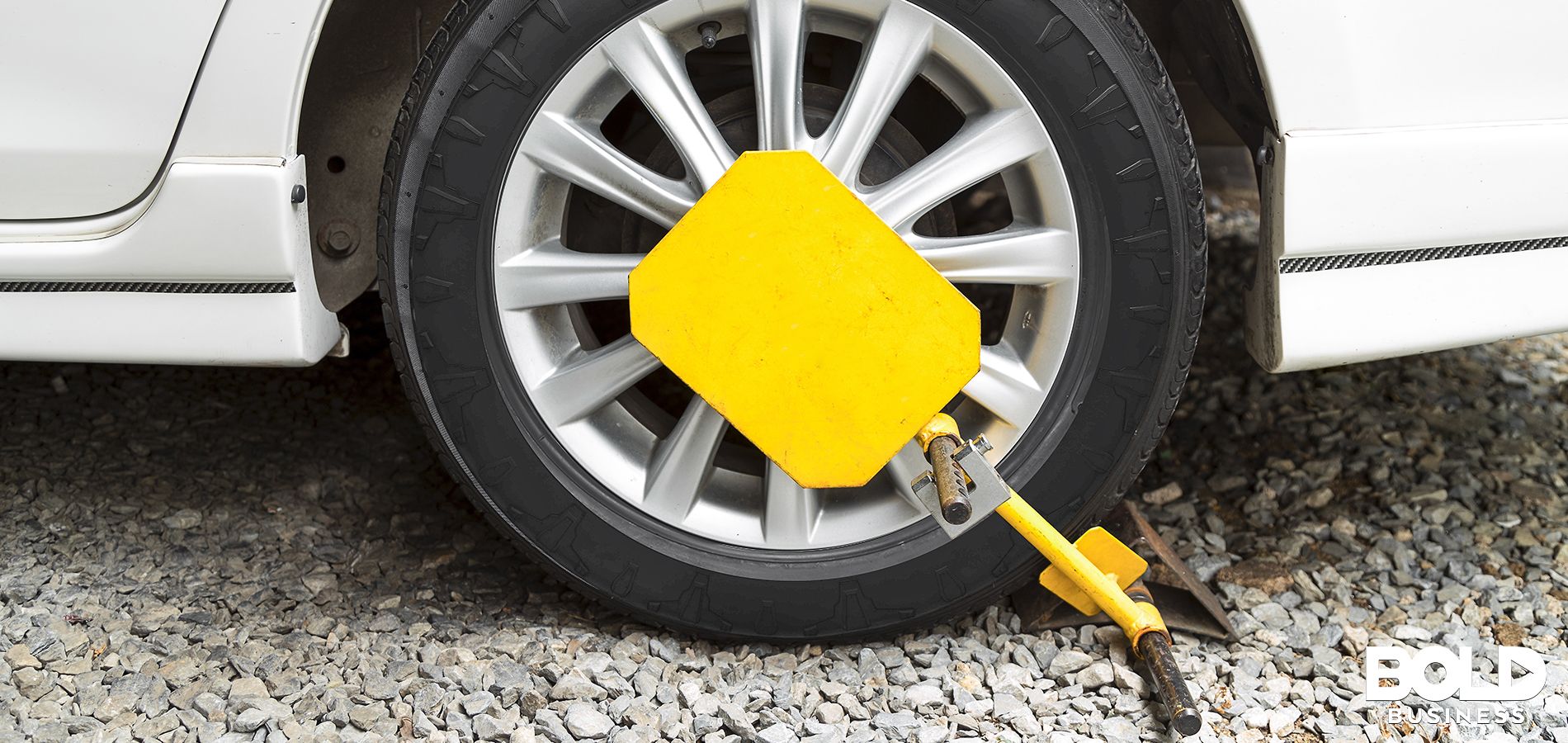
The technology consists of a car boot which can be unlocked with the use of a QR code. The new boot is also lighter than those previously used by the city. This can help make the job of attaching it safer for the officers involved. Once executed, the new smart boot will be used only on vehicles that have 5 or more outstanding traffic tickets.

For the car owner to unlock the boot, he has to pay all the outstanding fines over the phone, in person, or by sending the QR code (with payment) over the phone. Once the fines have been paid, the owner will be sent the unlock code. The unlocking process will take around 10 minutes in order to completely free the car. The owner then has 24 hours to return the car boot, or they face fines of $25 per day, up to a maximum of $500.

Car boots are essentially locks placed on the car tire, which prevents the car from moving. The older car boots can only be unlocked by the authorities, although they may be destroyed by forcing the car to drive. This however can damage the car, and also counts as a violation. The smart boots weigh approximately 16 lbs. and can be placed on the car wheel much faster than ordinary car boots. This makes it simpler, safer, and faster for enforcement officers to put them in place.

New Boots Make it Easier to Collect Fines
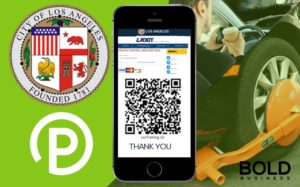
Car Boot that collects fines with QR code.

The newer car boots still work based on the same principle. However, these are lighter, allowing law and traffic enforcement officers to bring more of them along at one time. Initially, Los Angeles ordered 300 smart boots, but will be ordering more if the plan is implemented successfully. The smart boot technology has been utilized in Oakland since 2009, while Berkeley has been using these since 2011.

The use of this technology relies on a lot more than just QR codes and smartphone payment options. It also uses new methods for scanning vehicles and quickly compares them against an existing database. The vehicle scanning method can be expanded and used for other purposes including profiling, and subsequently, vehicle and driver location tracking. Yet, we still do not know how frequently the vehicle scanned database is scrubbed and purged. The new data comes in daily and can be used to compare the past days, weeks, or months of data.

For the city, this is a quick and easy way of getting drivers to pay their fines. With the use of a tool that scans license plates, law enforcers can search through a database for vehicles with five or more outstanding tickets. When the vehicle is found, an officer in the area is informed and the smart boot is installed. The aim is not to catch new violators, but to find those with multiple outstanding violations. In this manner, the city will be able to collect a significant portion of the $21 million in outstanding fines.


Hyperloop on Track to Reach Objectives in Test

The Hyperloop One proved that it is making headway during its second test, in an effort to quickly become a reality. This time, the 28 foot long test pod traveled the 500 meter track and reached a top speed of 192 mph. Achieving over 3.5 times more horsepower than the May 2017 test.

In the Ping-Pong experiments, it was possible to run the balls through the tube with almost no energy expended.

The theory behind the Hyperloop was first discussed during the 1970s. The idea was to have a tunnel with a near vacuum, or thin pressure, and essentially just drop a train like vehicle inside of it. Due to the near vacuum, the vehicle would be able to easily reach supersonic speeds and allow the vehicle to travel from Los Angeles to New York in four hours. The first actual proof of the concept occurred much later, when scientists forced air out of a pipe, and sent a Ping-Pong ball through it. It has been more than 30 years since the Ping-Pong ball zoomed through an almost airless pipe, and today the Hyperloop One is setting the standards for speed and transportation innovation.

The test tube track for the Hyperloop One is located in Nevada. Like any other transportation company, they need all the space they can get for testing purposes. The Hyperloop One’s initial test last May reached acceleration levels equal to 2G when reaching 70mph. There was no report on the acceleration during the latest test. However, airplanes typically reach 1.1G or 1.2Gs during takeoff.

Can Humans Withstand Turns at HyerLoop Speed?

Experts say that the real problem is not the initial acceleration, but the G forces during turns. If the turn is too tight, the G-forces might go beyond 2G. Regular persons can withstand 2G forces without any adverse effects. Nevertheless, tighter turns would require special equipment for the person, like a G-suit. To fix this issue, turns should be made wide enough so they are almost imperceptible to passengers.

High speed train in countryside.

There are several companies vying to implement this technology. Basically, it involves a tunnel with a partial vacuum (low air pressure), a pod or car, and maglev tracks. Unlike conventional maglev vehicles, the magnets do not need to make use of copper coils, allowing the track to be aluminum.

With low air pressure, the vehicle can move faster without any air friction. Meaning there is less energy required to move the pod forward. In the Ping-Pong experiments, it was possible to run the balls through the tube with almost no energy expended. Still, it was vital for one end to be opened just as the Ping-Pong ball was placed at the other end, which was also opened simultaneously. The difference in pressure forced the ball through the tube.

This may not be possible with a much heavier pod, but with negligible air resistance the vehicle can reach target speeds, even with low power costs. Again, this all boils down to economics. Any new technology should be able to match the prices of existing technology, as well as present improved and additional benefits, before the public begins using it. The novelty of an object may not be enough to get it through the initial hump and into financial security.

The Hyperloop will be competing against planes for speed, and buses or trains for a safer and faster travel experience. In order to turn a profit, it should present a value proposition which can beat the others while maintaining their slightly premium pricing.

How can we help?

Bold Business Insights
Privacy Overview

This website uses cookies so that we can provide you with the best user experience possible. Cookie information is stored in your browser and performs functions such as recognising you when you return to our website and helping our team to understand which sections of the website you find most interesting and useful.