

US crude oil production has just hit a record 1.3 million barrels of crude per day, sending US oil into all parts of the globe amid reports of daily production cuts by Russia and the Organization of the Petroleum Exporting Countries (OPEC).
This bold development is just the beginning. Experts say the bell has tolled on the cartel’s monopoly over the oil market as a direct result of advancements in energy technology and the magic of free markets. US oil production has now transformed the energy market.
US domestic oil production has gone up to 9.34 million barrels a day and the number is still rising. This could lead to movement in prices, which have just been raised by market maker Saudi Arabia. The official selling prices for crude oil grades going to Asia have increased by $0.60 a barrel for the month of July, due to extended supply cuts from both OPEC and non-OPEC members.
Additionally, the Energy Information Administration said US refineries topped their April industry record by processing 17.51 million barrels of oil a day.
“I expect we’re going to see new records set over the next six months as U.S. production continues to ramp up … OPEC has become the swing producer of the world because other producers have figured out how to lower their costs and increase their efficiency and get more oil out of the ground profitably at $50 … OPEC needs to just grit their teeth and wait for world oil demand to soak up the oversupply,” Andrew Lipow, president of Lipow Oil Associates, was quoted in the report.
Earlier, OPEC and Russia have set an output limit of 1.8 million barrels a day in the hopes of rebalancing the oil market. However, the move does not restrict oil production in the US.
Ending the Oil Monopoly
OPEC was originally formed in 1960 by the largest oil producing countries of Iran, Iraq, Kuwait, Saudi Arabia and Venezuela. These ‘market makers’ formed the alliance at a time when many new independent states were developing, and international economic and political landscapes were transitioning. Eventually, Algeria, Angola, Ecuador, Equatorial Guinea, Gabon, Libya, Nigeria, Qatar, and the United Arab Emirates, joined the group.
In 2015, OPEC reported that it held 80% of the world’s proven crude oil reserves; the bulk of this sat in reserves in the Middle East. However, that number has long since dropped.
Lipow noted that the US exported close to 900,000 barrels of crude oil per day, which amounts to more than the amount produced by Libya, Ecuador, Qatar or Gabon. These four produce the least amount of oil among the 17 OPEC member nations.
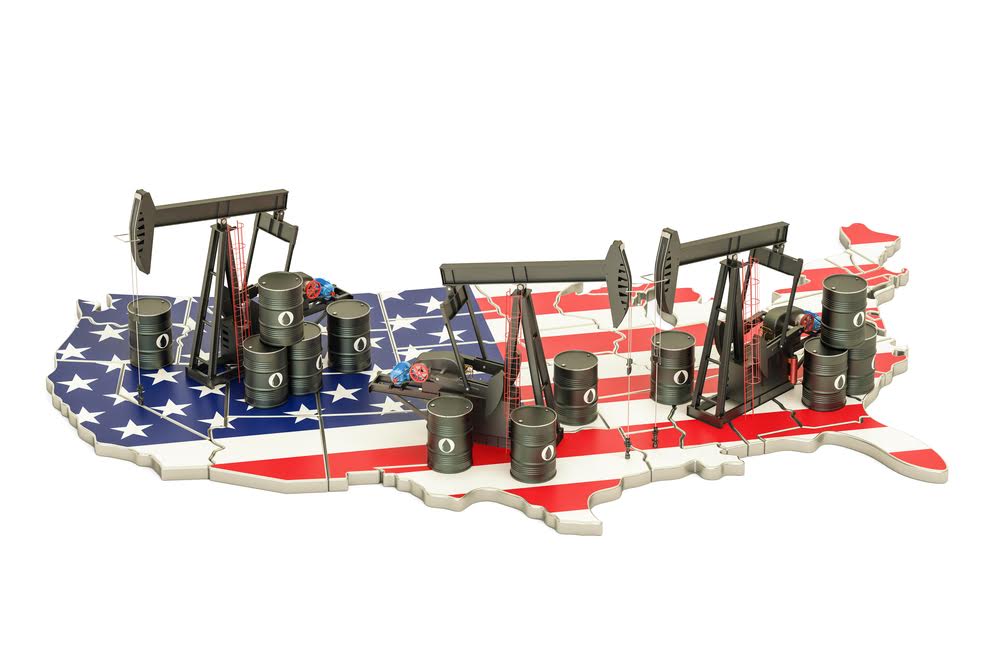
OPEC’s influence in the oil market has already been clipped – if not overshadowed – by the boom in US oil production.
“Saudi Arabia and OPEC are no longer in control,” according to Douglas Rachlin, managing director at Neuberger Berman’s Rachlin Group. He added that “the emergence of US shale as a key global player that can pump even during low oil prices means OPEC can no longer manipulate prices. The shale revolution has changed a lot of things.”
“The reality is that the US is now…the swing producer,” said billionaire Michael Hintze, who founded the hedge fund CQS.
America’s West Texas region is one of the most highly sought sites for horizontal oil drilling and fracking. These are energy innovations that produced a bold and transformative effect on the global energy market.
The Death of OPEC’s Market Power
In an exclusive interview with Bold Business, Robert Bryce, an author and senior fellow at the Manhattan Institute, reiterated that OPEC has been “dismembered, neutered, and no longer has any market power”.
OPEC has been “dismembered, neutered, and no longer has any market power
“The energy innovations in the last decade in hydraulic fracturing and horizontal drilling have had a transformative effect in the global energy market,” he said, adding that in the last decade, gas production in the US has increased by 50 percent. This development, in turn, fundamentally changed America’s role in not just the oil market, but also the natural gas market.
“The combination of these technologies has been in fact transformative. It has dismembered OPEC. OPEC has been completely neutered; OPEC has no market power – OPEC is in fact, dead,” Bryce declared.
The change in the balance of power in the global energy markets is a bold and very welcome change. Advancements in energy technology, particularly in hydraulic fracturing and horizontal drilling, helped tipped the scales in favor of the underdog.
Robert Bryce is a Senior Fellow at the Manhattan Institute. He has been writing about the energy sector for more than two decades and appears regularly on major media outlets like; Fox News, CNN, NPR, PBS, and BBC. Bryce has delivered more than 200 invited and keynote lectures to different groups, ranging from the Marine Corps War College and University of Calgary, to the Sydney Institute and Melbourne’s Institute of Public Affairs.
