
Bold Business Logo

Virtual Reality – First Entertainment, Next Medicine

Thanks to bold leaders like Dr. Albert “Skip” Rizzo, director of Medical Virtual Reality at the Institute for Creative Technology, Virtual Reality Therapy (VRT) is fast becoming a go-to tool in the therapist’s toolbox for treating anxiety and trauma.

Virtual Reality Therapy (VRT), a method of psychotherapy, uses virtual reality technology to treat patients with anxiety disorders and phobias. VRT is not new.  Psychologists have been exploring the use of VR since the 1990’s. However, heretofore high technology costs and complex user interfaces have prohibited widespread use.   Fortunately, the competitive marketplace drives continuous innovation resulting in opportunities for broader application.

“Finally, the technology has caught up with the vision in this area, and I expect it to really take off in the next year,” Rizzo says. Rizzo turned a bold idea into bold action to develop Bravemind, an application used to treat PTSD. Bravemind is comprised of 14 virtual “worlds” that immerse patients in an environment simulating the original trauma. Using a treatment called “exposure therapy,” the patient repeatedly relives the experience as a therapist helps him/her process it. These cycles of confronting and processing the trauma assist the brain in reducing anxiety levels.

Using virtual reality technology to treat patients with anxiety disorders and phobias

In the US, nearly 8 million adults have PTSD during a given year. Worldwide, the figure is a staggering 223 million. The condition can occur after someone experiences extreme trauma—a terrifying event or ordeal that a person has experienced, witnessed, or learned about (e.g., war, disaster, or physical abuse).

Moreover, mental disorders affect up to 450 million people worldwide, and depression alone is one of the leading causes of disability. The vast majority of these people do not have access to adequate treatment if any at all. The economic impact on the global economy is an estimated US $2.5 trillion per year, an amount that is expected to increase to US$6 trillion by 2030.

“My mission is to drag psychology kicking and screaming into the 21st century,” Rizzo says.  Bravemind, developed in partnership with Virtually Better, is now sold to institutions around the world.

Treating PSTD with Virtual Reality to heal trauma has demonstrated the power of an innovative, cost-effective tool that can have a bold impact on global mental health and the global economy.
Edward Buckler: Saving Lives Through Plant Science Reaps Rewards

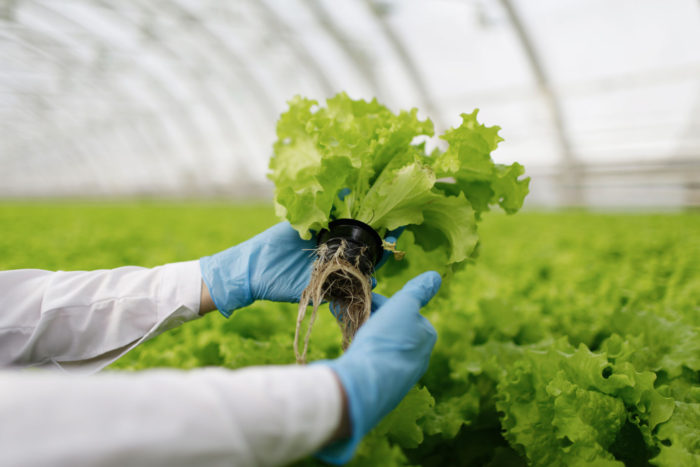
“Millions of hungry, poor people don’t have the hundred years it would take to repeat what conventional breeding did before,” says geneticist Edward Buckler. Buckler is the bold leader of a team of USDA Agriculture Research Service (ARS) geneticists working to address critical agricultural issues necessary for world food security, such as hybrid vigor, local adaptation, drought tolerance and disease resistance.

Buckler is the first recipient of the National Academy of Science’s Prize in Food and Agriculture Sciences.  This scientist has turned his bold ideas into life-saving action to feed a hungry world. Through his pioneering work—using large-scale genomic approaches to associate genes with crop traits—plant breeders’ more quickly know which genes to manipulate to improve critical attributes.

Maize varieties adapted by geneticist Edward Buckler and his team, have 15 times the level of vitamin A of common varieties

According to the United States Department of Agriculture, expediting variety development is vital to the US and global food security. For example, the maize varieties adapted by Buckler and his team have 15 times the level of vitamin A of common varieties. The additional vitamin A resolves a life-threatening deficiency for people in the developing world.

Buckler’s genetic analysis techniques have proven to be so affordable and adaptable, they have provided benefits far beyond the ARS lab. The methods have been used to improve the performance of more than 1,000 different species. Additionally, thousands of research groups around the world use the open-source software and databases developed by Buckler and his team.

The $100,000 National Academy of Science Prize in Food and Agriculture Sciences recognizes research by a mid-career scientist at a US institution who has made a significant contribution to agriculture or food production.

For his bold impact improving nutrition and food security, Edward Buckler wins inaugural NAS prize in food, ag sciences.

How can we help?

Bold Business Insights
Privacy Overview

This website uses cookies so that we can provide you with the best user experience possible. Cookie information is stored in your browser and performs functions such as recognising you when you return to our website and helping our team to understand which sections of the website you find most interesting and useful.