Bold Business Logo

Nine Billion and Counting – How Do We Feed The World?

On a planet of 9 Billion People, 800 million are starving. How do we address a problem of such magnitude?  Especially when so much food is wasted on a daily basis!

One bold leader leads the charge — from farm to market to table, find and stop food waste. All along the food chain almost one-third of the food production, 2.9 million pounds per year is lost.


Tristram Stuart, author, and food recovery activist travels the world, from a citrus farm in Peru to high-end restaurants in New York and Paris to raise global awareness and fight food waste. Stuart promotes three simple yet bold measures to champion food recovery—salvage scrap, sell surplus, and eat ugly!

Frequently overlooked but adding to the high cost of food waste are the costs of the water and fuel used in farming, transportation, and storage. By employing the myriad of methods available to reduce food waste, we will have a bold impact to reduce or eliminate world hunger; we will be able to do it without destroying more land, contributing to the increasing world water shortage, or adding more greenhouse gases to the atmosphere.

Awareness of the magnitude of the problem is only the first step. Stopping food waste to feed millions, takes bold action—even doing something as simple as selecting Ugly Fruits and Vegetables Can Help Solve World Hunger.
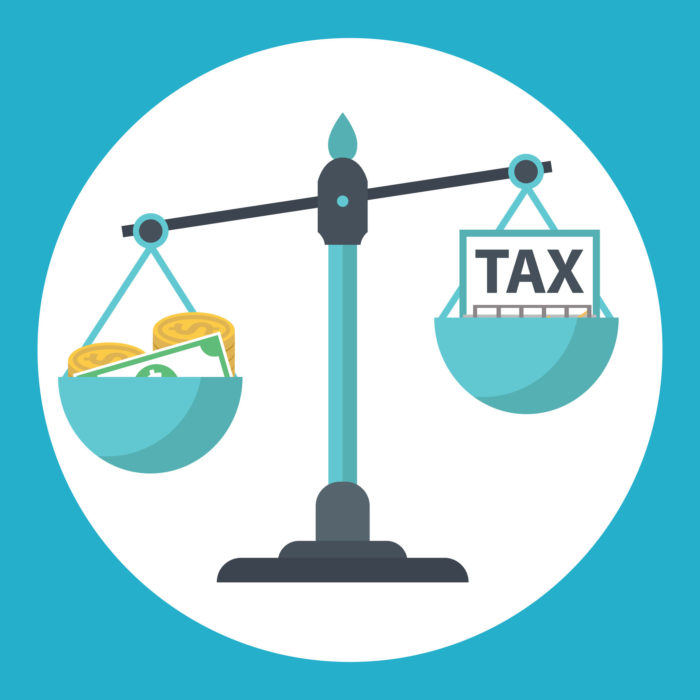
Impact of Taxation on Economic Development: Will Lowering Taxes Prove Beneficial In The Long Term?

Economists have been searching for bold ideas to shake up an uncertain economic landscape since the recession. Of course, lower tax rates are something all businesses desire. However, it remains to be seen if lowering tax rates or implementing tax reforms will prove beneficial for long-term economic growth. Thus, there is still an ongoing discussion on the impact of taxation on economic development. Here, Bold Business looks at whether lowering taxes will, in fact, stimulate economic growth and drive business in a struggling economy.

According to a new paper published by Brookings, the “Effects of Income Tax Changes on Economic Growth”, tax rate cuts clearly stimulate a weak economy in the short-term. This statement has a bold and positive impact on workers and is good for business.

Although businesses thrive during lower tax rates, the government somewhat finds itself struggling—unless they can finance tax cuts with their own spending cuts. If they fail to achieve this, it can result in an increased federal budget deficit, which will raise interest rates and reduce national saving.

More on the Impact of Taxation on Economic Development

In the Brookings paper, Senior Fellow William Gale and Dartmouth Professor Andrew Samwick state that “rate-reducing income tax reforms may raise economic growth, but it is not a given”. They argue that “revenue-neutral tax reforms do not add to the deficit or debt”, and “distributionally-neutral base-broadening tax reforms spread out the tax burden but leave the total revenues to the government the same”.

Gale and Samwick identify four main areas of tax policy which they believe will stimulate and boost the economy in the long-term: a set of positive tax incentives which encourages work, saving and investment; ensuring tax cuts are targeted and bespoke to current economic activity; monitoring and adjusting to different types of incomes and consumption; and ensuring minimal increases in the budget deficit.

In a statement that might seem obvious, the fundamental finding of the Brookings paper is that not all tax changes will have the same impact on economic growth.

Gale and Samwick conclude that “reforms that improve incentives, reduce existing subsidies, avoid windfall gains, and avoid deficit financing will have more auspicious effects on the long-term size of the economy, but in some cases may also create trade-offs between equity and efficiency”. This scenario just goes to show that when it comes to the economy, it takes bold changes in tax reforms to make bold steps toward building a bold business!

Bold New App To Improve Nutrition In The Workplace

The development of new apps designed to educate people about nutrition is being boldly introduced to businesses to encourage employees to embark on healthier diets. By creating easy access for employees by way of an app, they can benefit from nutritional guidance and support. Enter Zipongo, a startup app with the goal of helping companies and their employees make healthier food choices. The app works by allowing employees to browse through a company’s cafeteria menu and receive suggestions based on preset, personal nutrition guidelines. The idea is to empower employees to make better nutritional choices on their own (with a little guidance from the app, of course) to improve overall wellness and increase productivity.

The company debuted in 2011 and has had over 125 companies use its services to better the health and wellness of their employees. In fact, Google has been a long time user of Zipongo’s services, and IBM recently started implementing the app as well.

The app charges companies around $50 per employee (per year) and allows complete access to its various nutritional guidance services. While on the surface, this may seem like a small-scale business model, Zipongo has garnered over $10 million in financing since its founding in 2011.

Jason Langheier, the driven founder of this food-based company, said he got the inspiration for the app when he realized that nutrition counseling services were expensive and exclusive. According to the National Center for Health Statistics, the estimated average cost of a nutrition counseling session was $73. Langheier decided there had to be a better solution. “I thought, ‘Wouldn’t it be better to have a useful set of digital tools first?”, he said. The idea that nutritional guidance could be easily accessible and affordable led Langheier to develop Zipongo, which at its core boldly aims to reduce healthcare costs and lower employee sick days.

As a whole, Zipongo has seen positivity and improvement in the employees and companies that use the app. The ability of users to have the freedom to make their own food choices while having the professional-level guidance of a nutritionist has made Zipongo a bold new player in the health startup game. At the rate the company is going, we predict seeing an overall increase in employee nutrition, a decrease in sick days and high healthcare costs, and a smaller and smaller group of grumpy, hungry co-workers.

For more bold, forward moving nutrition news, explore our other food articles here, or for more on impassioned leaders, check out our bold leaders page here.

How can we help?

Bold Business Insights
Privacy Overview

This website uses cookies so that we can provide you with the best user experience possible. Cookie information is stored in your browser and performs functions such as recognising you when you return to our website and helping our team to understand which sections of the website you find most interesting and useful.